McLaren Cars Canada
The McLaren Group has always been involved in auto racing, whether it's Formula 1, IndyCar, Can-Am, Le Mans or another high-profile series.
Originally, professional race car driver Bruce McLaren wanted to leverage his successful F1 expertise to build a road-going model. He therefore developed the M6 GT in 1968-1969.
A single prototype got the green light, sharing its unibody architecture with the McLaren M6. It had a dry weight of 725 kilos and used a 5.7-litre Ford engine producing about 370 horsepower, good for 0-100 km/h sprints in 8.0 seconds and a top speed in excess of 265 km/h.
The tragic death of Bruce McLaren in June 1970 prematurely ended the project after three units had been delivered. It took nearly 20 years before the company launched another vehicle.
McLaren Cars was established in 1989. A year later, a 10-hour executive meeting signalled the beginning of an ambitious venture aimed at selling the fastest, best-handling supercar in the world, with the highest power-to-weight ratio of any production automobile. The goal was also to make it practical and useable on a daily basis.
The result was the McLaren F1, unveiled as part of the 1992 Monaco Grand Prix. Its BMW-developed, 6.0-litre V12 engine generated 627 horsepower and 480 pounds-feet of torque, allowing it to go from 0 to 60 mph (96 km/h) in 3.2 seconds, 0 to 100 mph (160 km/h) in 6.3 seconds, and 0 to 200 mph (321 km/h) in 28 seconds. These incredible performance figures were largely attributable to the F1's light weight of 1,140 kilos.
Nine GTR models specially designed for racing were also created. They went on to dominate the BPR Global GT series and win the 24 Hours of Le Mans.
Late in 1998, the 107th McLaren F1 rolled off the assembly line, wrapping up a short but glorious 6-year run.
Soon after, McLaren teamed up with Mercedes-Benz (its Formula 1 partner) to develop the SLR.
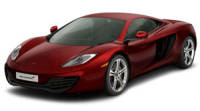
In 2011, the company inaugurated another new model, the MP4-12C. Using a 3.8-litre, twin-turbo V8 engine mated to a 7-speed sequential transmission, the 1,336-kg supercar cranks out 592 horsepower and 443 pounds-feet of torque.
It's now the lone production model in the lineup, although McLaren is still deeply involved in auto racing and particularly Formula 1.
[...] Read more about mclaren
Originally, professional race car driver Bruce McLaren wanted to leverage his successful F1 expertise to build a road-going model. He therefore developed the M6 GT in 1968-1969.
A single prototype got the green light, sharing its unibody architecture with the McLaren M6. It had a dry weight of 725 kilos and used a 5.7-litre Ford engine producing about 370 horsepower, good for 0-100 km/h sprints in 8.0 seconds and a top speed in excess of 265 km/h.
The tragic death of Bruce McLaren in June 1970 prematurely ended the project after three units had been delivered. It took nearly 20 years before the company launched another vehicle.
McLaren Cars was established in 1989. A year later, a 10-hour executive meeting signalled the beginning of an ambitious venture aimed at selling the fastest, best-handling supercar in the world, with the highest power-to-weight ratio of any production automobile. The goal was also to make it practical and useable on a daily basis.
The result was the McLaren F1, unveiled as part of the 1992 Monaco Grand Prix. Its BMW-developed, 6.0-litre V12 engine generated 627 horsepower and 480 pounds-feet of torque, allowing it to go from 0 to 60 mph (96 km/h) in 3.2 seconds, 0 to 100 mph (160 km/h) in 6.3 seconds, and 0 to 200 mph (321 km/h) in 28 seconds. These incredible performance figures were largely attributable to the F1's light weight of 1,140 kilos.
Nine GTR models specially designed for racing were also created. They went on to dominate the BPR Global GT series and win the 24 Hours of Le Mans.
Late in 1998, the 107th McLaren F1 rolled off the assembly line, wrapping up a short but glorious 6-year run.
Soon after, McLaren teamed up with Mercedes-Benz (its Formula 1 partner) to develop the SLR.
In 2011, the company inaugurated another new model, the MP4-12C. Using a 3.8-litre, twin-turbo V8 engine mated to a 7-speed sequential transmission, the 1,336-kg supercar cranks out 592 horsepower and 443 pounds-feet of torque.
It's now the lone production model in the lineup, although McLaren is still deeply involved in auto racing and particularly Formula 1.
McLaren Coverage
Latest Review
I Say
79%
79%
The return of the British supercar
McLaren is a very well-known name on racing circuits, but will their latest supercar capture the hearts and certified cheques of those who can afford one?
Latest News
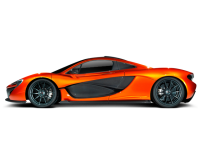
McLaren P1 development continues with extreme cold-weather testing
In order for the McLaren P1 to reach its goal of becoming the best driver's car in the world, both on the road and the track, the automaker took it all the way to the Arctic Circle to conduct testing in extreme weather conditions.
McLaren P1: 0-300 km/h in under 17 seconds!
McLaren Automotive has announced the final performance numbers for its P1 supercar ahead of a global premiere at the Geneva Motor Show next week.
McLaren P1 cranked up to over 900 horsepower!
McLaren announced that the P1 supercar will combine a mid-mounted 3.8L twin-turbo V8 engine with a high-output electric motor to generate a total of 903 horsepower.