





Forward motion
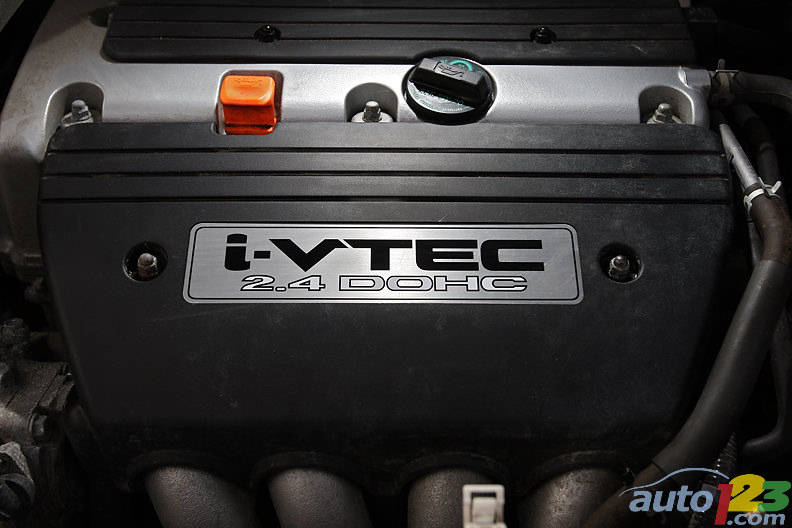
Under the hood slumbers the same 2.4-litre, 166-hp, 4-cylinder mill that outfits the other two versions. The engine turns out humble accelerations (0-100 km/h in under 10 seconds) and the corresponding throttle response, both geared towards either family or touring scenarios. The engine does consume 11 litres per 100 km in the winter, making it far from frugal.
The automatic 5-speed transmission stands out, the shifter emerging from a bulge in the dash. It doesn’t offer a sequential manual mode, but a switch allows you to downshift from fifth to fourth gear. Note that Honda hasn’t made a manual transmission available on this vehicle.
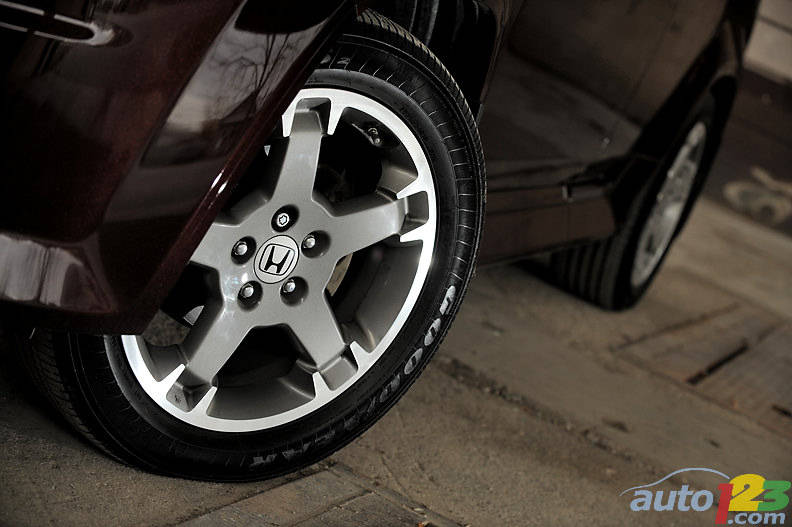
The Element SC uses the same four-wheel disc brakes, supported by a fairly unobtrusive ABS system.
Practical – or not?
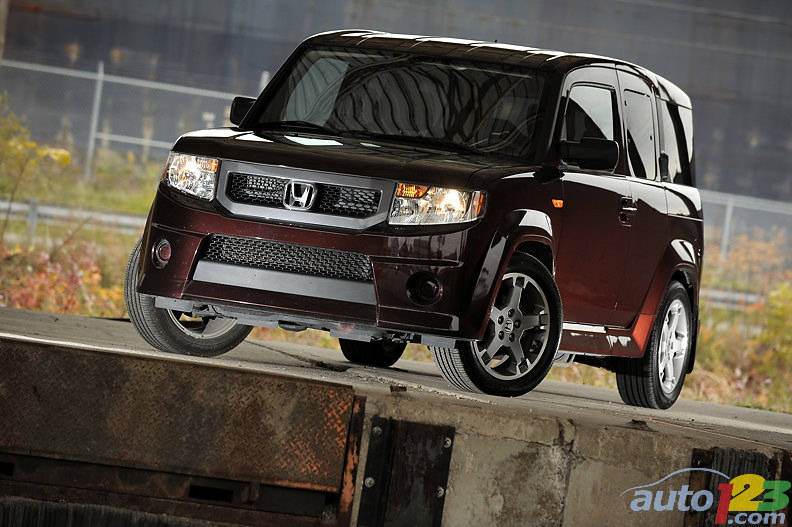
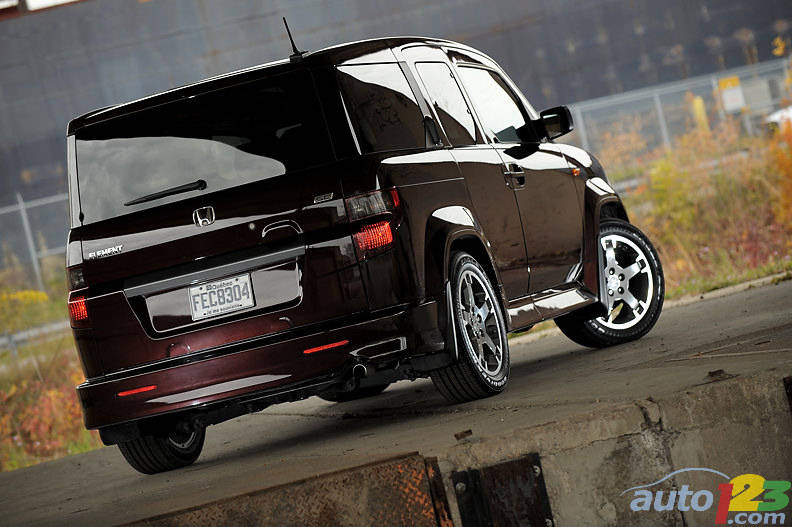
The Element’s atypical body features clamshell rear doors, a concept that looks better on paper. Loading or unloading front and rear passengers at the same time is a complicated process, especially when you’re parked near a wall or another vehicle. Simultaneously opening both doors on one side effectively traps the passengers in a little pen from which it’s hard to escape.
On the other hand, the liftgate/tailgate combo is quite convenient in several ways. First, less free space is required behind the vehicle to get it open. Second, the tailgate drops down to floor level so you can easily load up bulky items, and it can also double as a shelf or even a seat. Third, you can use the liftgate on its own to get some protection from the sun or the rain, for example!
The cabin features particularly big bucket seats. In back, the two symmetrical rear seats fold flat and together with the front seats transform into a bed. They also flip up to reveal a vast interior cargo area. But in the SC’s case, the playful side of the Element may be forgotten by the buyer from the get-go, replaced by the image that this little four-wheel box is supposed to convey.
If not, the buyer can simply shell out a meagre $400 extra for the Element EX, with its four-wheel drive and uncarpeted floors. But that’s the elementary Element, not the trendy one…
Under the hood slumbers the same 2.4-litre, 166-hp, 4-cylinder mill that outfits the other two versions. The engine turns out humble accelerations (0-100 km/h in under 10 seconds) and the corresponding throttle response, both geared towards either family or touring scenarios. The engine does consume 11 litres per 100 km in the winter, making it far from frugal.
The automatic 5-speed transmission stands out, the shifter emerging from a bulge in the dash. It doesn’t offer a sequential manual mode, but a switch allows you to downshift from fifth to fourth gear. Note that Honda hasn’t made a manual transmission available on this vehicle.
The Element SC uses the same four-wheel disc brakes, supported by a fairly unobtrusive ABS system.
 |
| In back, the two symmetrical rear seats fold flat and together with the front seats transform into a bed. (Photo: Philippe Champoux, Matthieu Lambert/Auto123.com) |
Practical – or not?
The Element’s atypical body features clamshell rear doors, a concept that looks better on paper. Loading or unloading front and rear passengers at the same time is a complicated process, especially when you’re parked near a wall or another vehicle. Simultaneously opening both doors on one side effectively traps the passengers in a little pen from which it’s hard to escape.
On the other hand, the liftgate/tailgate combo is quite convenient in several ways. First, less free space is required behind the vehicle to get it open. Second, the tailgate drops down to floor level so you can easily load up bulky items, and it can also double as a shelf or even a seat. Third, you can use the liftgate on its own to get some protection from the sun or the rain, for example!
The cabin features particularly big bucket seats. In back, the two symmetrical rear seats fold flat and together with the front seats transform into a bed. They also flip up to reveal a vast interior cargo area. But in the SC’s case, the playful side of the Element may be forgotten by the buyer from the get-go, replaced by the image that this little four-wheel box is supposed to convey.
If not, the buyer can simply shell out a meagre $400 extra for the Element EX, with its four-wheel drive and uncarpeted floors. But that’s the elementary Element, not the trendy one…
Article Gallery