





The color was also more crisp and cool to look at. Holly says "It's a definite improvement. I love that I can see farther into the trees, and the light seems more concentrated and brighter. The old bulbs were almost yellow compared to these ones." We also noticed that light was more concentrated farther down the roadway rather than scattered and faded.
Next up, a set of Hella Performance Xenon Blue bulbs was installed to a 1997 Ford Contour. The OEM lights were aimed and examined on a nighttime drive through the woods- with the typical patchy, dull lighting pattern noted. After replacing the bulbs with a set of Performance Xenon Blue Bulbs, improvements were noted in down-road and peripheral visibility. The patchy pattern produced by the original bulbs was gone, and the Contour's owner, Chris Koski, noted another benefit as well.
"The difference between the OEM bulbs and the new Hella's is quite noticeable, particularly during highway driving. The color of the light is clearer and brighter. It' also really incredible how much farther away you can see signs and other reflective objects at down the roadway. I'm impressed!" he says.
Note that the higher volume of light produced by the replacement bulbs won't pose a problem to the eyes of oncoming drivers as long as they're aimed properly.
Why doesn't my factory Honda Civic have better lights?
All of the improvements noted beg the question- why don't automakers use more high performance illumination from the factory? Phillip Sadowski, a product manager at Hella, explains. "The main reason OE companies do not install higher performance halogen bulbs is cost. For the most part, they'll always find the cheapest way to meet the required standards."
John Todorovic, Sr. Application Engineer for SYLVANIA adds "there is a relationship between lamp life, light output and color temperature. In addition to meeting regulatory requirements, automakers are concerned with having lamps last the length of the car warranty, which may override their concerns to optimize both light output and color temperature."
Did you know that lightbulbs don't simply burn out but dim over time? It's true- though you may not notice the output and quality of light decreasing as it happens slowly. SYLVANIA recommends changing headlights once a year in pairs.
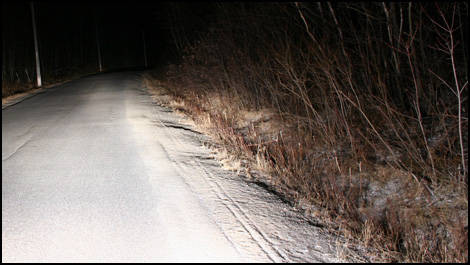 |
| Ford Contour (Before) |
Next up, a set of Hella Performance Xenon Blue bulbs was installed to a 1997 Ford Contour. The OEM lights were aimed and examined on a nighttime drive through the woods- with the typical patchy, dull lighting pattern noted. After replacing the bulbs with a set of Performance Xenon Blue Bulbs, improvements were noted in down-road and peripheral visibility. The patchy pattern produced by the original bulbs was gone, and the Contour's owner, Chris Koski, noted another benefit as well.
"The difference between the OEM bulbs and the new Hella's is quite noticeable, particularly during highway driving. The color of the light is clearer and brighter. It' also really incredible how much farther away you can see signs and other reflective objects at down the roadway. I'm impressed!" he says.
Note that the higher volume of light produced by the replacement bulbs won't pose a problem to the eyes of oncoming drivers as long as they're aimed properly.
Why doesn't my factory Honda Civic have better lights?
All of the improvements noted beg the question- why don't automakers use more high performance illumination from the factory? Phillip Sadowski, a product manager at Hella, explains. "The main reason OE companies do not install higher performance halogen bulbs is cost. For the most part, they'll always find the cheapest way to meet the required standards."
John Todorovic, Sr. Application Engineer for SYLVANIA adds "there is a relationship between lamp life, light output and color temperature. In addition to meeting regulatory requirements, automakers are concerned with having lamps last the length of the car warranty, which may override their concerns to optimize both light output and color temperature."
Did you know that lightbulbs don't simply burn out but dim over time? It's true- though you may not notice the output and quality of light decreasing as it happens slowly. SYLVANIA recommends changing headlights once a year in pairs.
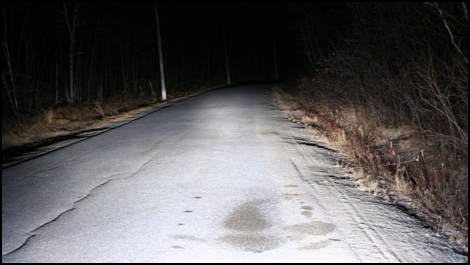 |
| Ford Contour (After) |