





MINI E drivers provide ongoing feedback that has already proven invaluable to the development work being done by the BMW Group’s Project i on what is called a Mega-City Vehicle – the company’s innovative program to develop a volume transportation solution to the demands of the world’s biggest cities in the 21st century. This vehicle is scheduled to be introduced just before the mid-point of this decade.
The self-selected group of 57 that agreed to participate in the UC Davis survey is part of a more extensive research project. Feedback from this program shows that the range of the MINI E enables drivers to use it for most daily driving needs. Reported range under normal circumstances varies between 70 – 100 miles with 45 percent reporting a typical range of 100 miles. MINI E drivers reported an average trip length of approximately 30 miles. Other studies have found that driver’s in the US average about 40 miles per day1. This makes the range of the MINI E suitable for most daily driving needs.
Many households in the study have replaced the primary vehicle of one driver with the MINI E. One-third of the participants have reported driving the MINI E even more than the household vehicle it replaced. The lack of a back seat and a usable trunk, rather than range, is most often the reason the MINI E is not chosen for a particular outing.
Drivers have also reported that driving the MINI E is fun. Most adapted quickly to the characteristics of the Brake Energy Regeneration function and like the feeling of control it gives them in being able to proactively extend the range of their MINI E by how they drive. Brake Energy Regeneration captures energy ordinarily lost on deceleration and coverts it into electrical energy to recharge the batteries. All drivers in the US study said they enjoy using one pedal to accelerate and decelerate. Many reported that once they became acustomed to the BER function, they enjoyed driving their conventional vehicles less.
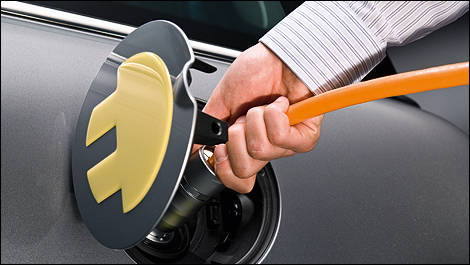
The study found that keeping the MINI E charged did not pose a problem. Recharging in the US requires four – five hours and, while it wasn’t always necessary based on their driving needs, about half of the drivers in the study report recharging daily as a matter of routine. Additional recharging away from their home charging station by-and-large proved unnecessary.
This first field-trial has provided Project i with invaluable insight as it prepares for its second field trial with the BMW ActiveE. The electric drivetrain developed for the BMW ActiveE will be used in the BMW Group’s first Mega-City Vehicle. The newly developed and more compact lithium-ion battery pack in the BMW ActiveE vehicle features liquid heating and cooling in order to provide a more consistent and predicatable driving range. Smartphone apps will enable the user to remotely check the available range of the BMW ActiveE’s battery. The apps will also enable the driver to begin heating or cooling the interior of the BMW ActiveE and thus the battery while still connected to the grid. This will allow the battery to function at its optimal operating temperature without affecting the range of the car.
The field trial for the BMW ActiveE will begin in 2011. As announced at the North American International Auto Show earlier this month, lease extensions will be offered to a number of MINI E drivers who wish to continue their electric driving experience until the BMW ActiveE becomes available.
photo:Mini
The self-selected group of 57 that agreed to participate in the UC Davis survey is part of a more extensive research project. Feedback from this program shows that the range of the MINI E enables drivers to use it for most daily driving needs. Reported range under normal circumstances varies between 70 – 100 miles with 45 percent reporting a typical range of 100 miles. MINI E drivers reported an average trip length of approximately 30 miles. Other studies have found that driver’s in the US average about 40 miles per day1. This makes the range of the MINI E suitable for most daily driving needs.
 |
Many households in the study have replaced the primary vehicle of one driver with the MINI E. One-third of the participants have reported driving the MINI E even more than the household vehicle it replaced. The lack of a back seat and a usable trunk, rather than range, is most often the reason the MINI E is not chosen for a particular outing.
Drivers have also reported that driving the MINI E is fun. Most adapted quickly to the characteristics of the Brake Energy Regeneration function and like the feeling of control it gives them in being able to proactively extend the range of their MINI E by how they drive. Brake Energy Regeneration captures energy ordinarily lost on deceleration and coverts it into electrical energy to recharge the batteries. All drivers in the US study said they enjoy using one pedal to accelerate and decelerate. Many reported that once they became acustomed to the BER function, they enjoyed driving their conventional vehicles less.
The study found that keeping the MINI E charged did not pose a problem. Recharging in the US requires four – five hours and, while it wasn’t always necessary based on their driving needs, about half of the drivers in the study report recharging daily as a matter of routine. Additional recharging away from their home charging station by-and-large proved unnecessary.
This first field-trial has provided Project i with invaluable insight as it prepares for its second field trial with the BMW ActiveE. The electric drivetrain developed for the BMW ActiveE will be used in the BMW Group’s first Mega-City Vehicle. The newly developed and more compact lithium-ion battery pack in the BMW ActiveE vehicle features liquid heating and cooling in order to provide a more consistent and predicatable driving range. Smartphone apps will enable the user to remotely check the available range of the BMW ActiveE’s battery. The apps will also enable the driver to begin heating or cooling the interior of the BMW ActiveE and thus the battery while still connected to the grid. This will allow the battery to function at its optimal operating temperature without affecting the range of the car.
The field trial for the BMW ActiveE will begin in 2011. As announced at the North American International Auto Show earlier this month, lease extensions will be offered to a number of MINI E drivers who wish to continue their electric driving experience until the BMW ActiveE becomes available.
photo:Mini