





Unifor, Canada’s largest private-sector union, says it’s ready to resume talks with Stellantis over a new collective agreement, but warns strike action is possible.
Unifor and the automaker have spent the last week licking their wounds after the reportedly difficult talks between them broke off. The old collective agreement covering more than 9,000 Stellantis workers expired on September 20, and a major sticking point in the talks is the future of Stellantis’ idled Brampton, Ontario assembly plant.

Broken promises over Brampton
By all accounts, Stellantis-Unifor talks were, right off the bat, more tendentious than they were with Ford and General Motors. In those cases, the automakers and the union came to relatively quick agreements.
Not so here, and things got more venomous when it came to light that Stellantis quietly signed a memorandum of understanding on September 11 to sell the Brampton facility to Roshel, a defense equipment manufacturer.
Assembly at the factory came to a halt in late 2023 after the plant completed the final production runs of the Dodge Charger, Challenger and Chrysler 300. Original plans called for retooling the plant to build the next-generation Jeep Compass, but Stellantis ultimately opted to move production to Belvidere, Illinois. That came, of course, amid the U.S. administration’s trade tariffs and threats.
Stellantis Canada CEO Trevor Longley stated that after reviewing every viable alternative, the company found no sustainable, long-term business case to keep automotive manufacturing alive at the location.

Unifor’s response
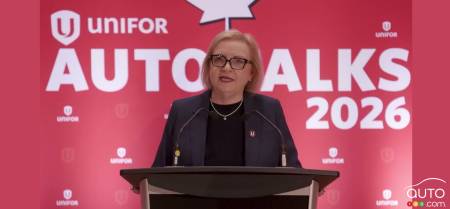
Unifor National President Lana Payne, who described collective bargaining with Stellantis as extremely challenging, confirmed this week that a walkout remains a distinct possibility. Payne has written to federal Industry Minister Mélanie Joly, calling on the government to step in and halt the potential deal to sell off the Brampton plant.
While Roshel has promised to prioritize hiring former Stellantis employees and create 2,000 jobs, its production targets call for assembling only two to three vehicles per day. That figure represents a tiny fraction of the 500 to 1,000 units turned out daily under Stellantis, raising fears that the transition could deal a devastating blow to the local supply chain.
Both Stellantis and Unifor insist they remain willing to return to the bargaining table, but for now, the standoff continues. And all the while, Ottawa is mulling measures to hold the automaker accountable for its previous manufacturing commitments in Canada.