





You might think that distracted, inattentive or tired drivers should just stay off the road. But, drive they will- perhaps more a fact of life than a problem with any solution. Volvo has decided to try and reduce the number of "accidents" these drivers will cause- making up as high as ninety percent of collisions.The Scandinavian carmaker will introduce Driver Alert Control alongside a Lane Departure Warning technology as part of a Driver Alert System on 2008 models like the S80, V70 and XC70.
The first technology, Driver Alert Control, monitors the way the vehicle is being operated and determines whether or not it is being driven in a controlled or uncontrolled manner. The system doesn't monitor drivers, but vehicle operation itself- a method unique to the carmaker.
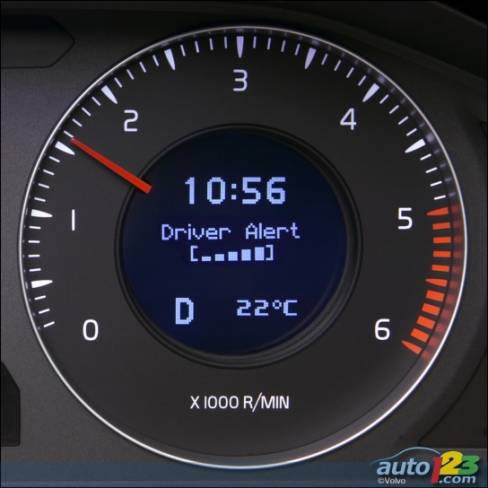
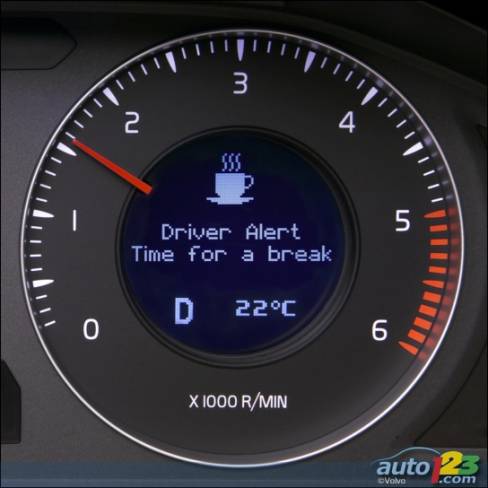
Using sensors and a forward-facing camera, the car alerts dozy or distracted drivers with an audible signal, as well as a text message in the instrument cluster and a picture showing a coffee cup- telling them its time for a break.
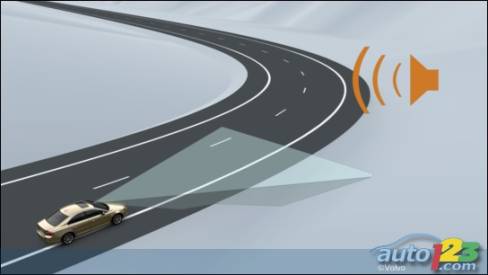
The Lane Departure Warning system (LDW), similarly, uses sensors and a camera to monitor the lines on the roadway, and will alert drivers who leave their lane for no obvious reason- for instance without a signal.
"We do not monitor human behaviour - which varies from one person to another - but instead the effect that fatigue or decreased concentration has on driving behaviour," explains Daniel Levin, project manager for Driver Alert Control at Volvo Cars. "Our system is based on the car's progress on the road. It gives a reliable indication if something is likely to go wrong and alerts the driver before it is too late."
photo:Volvo
The first technology, Driver Alert Control, monitors the way the vehicle is being operated and determines whether or not it is being driven in a controlled or uncontrolled manner. The system doesn't monitor drivers, but vehicle operation itself- a method unique to the carmaker.
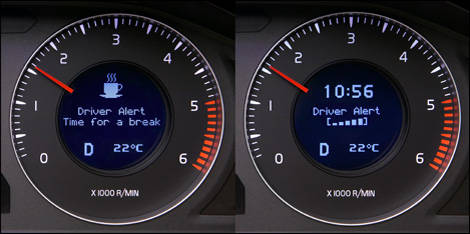 |
Using sensors and a forward-facing camera, the car alerts dozy or distracted drivers with an audible signal, as well as a text message in the instrument cluster and a picture showing a coffee cup- telling them its time for a break.
The Lane Departure Warning system (LDW), similarly, uses sensors and a camera to monitor the lines on the roadway, and will alert drivers who leave their lane for no obvious reason- for instance without a signal.
"We do not monitor human behaviour - which varies from one person to another - but instead the effect that fatigue or decreased concentration has on driving behaviour," explains Daniel Levin, project manager for Driver Alert Control at Volvo Cars. "Our system is based on the car's progress on the road. It gives a reliable indication if something is likely to go wrong and alerts the driver before it is too late."
photo:Volvo

Article Gallery