





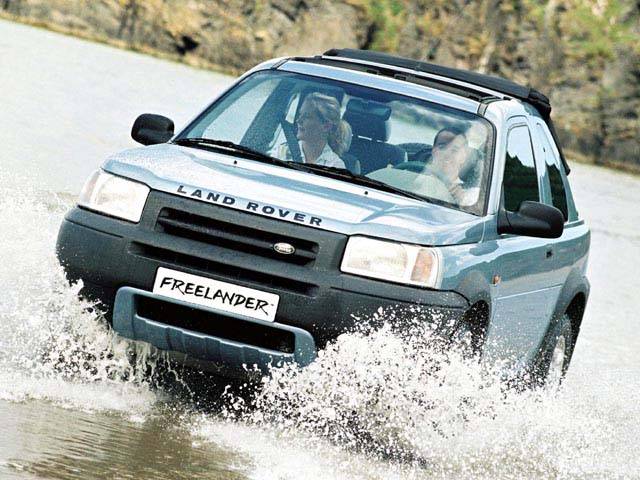
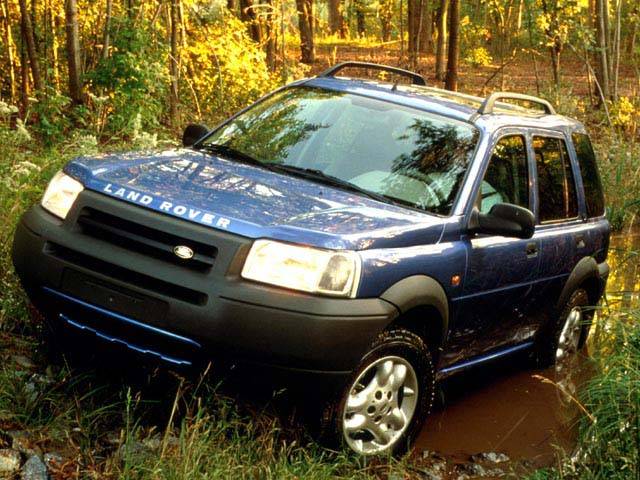
Earlier, I had the opportunity to drive the Freelander off-road in an exercise in which I could try first hand the Hill Descent system included in the package. To activate the system, all the driver has to do is to press a button in the console. The system works only in the first and reverse gears of the five-speed Jatco transmission. So when the descent is steep, the driver passes in low gear, presses the button and lets the car go downhill by itself, without touching the brakes. It works! And it works well! The same Freelander is also able to climb steep hills with ease and ride on hillsides at a greater angle than expected.
For winter driving, heating is greatly sufficient (its controls are easy to see and manipulate) and I appreciated the adjustable front lamps. With the help of a dash-mounted control, the driver can adjust the level of the headlamps. This was designed to compensate loading the rear of the car or pulling a trailer. Incidentally, a Freelander can pull trailers up to 750 kg (1,650 lb) if it has no brakes and 2000 kg (4,410 lb) if it is equipped with brakes.
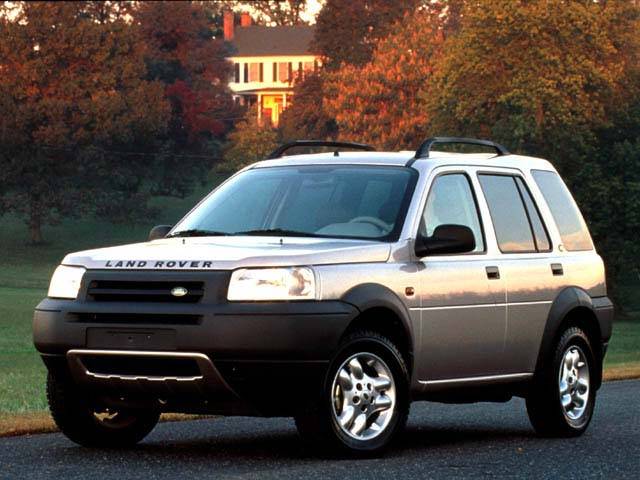
Naturally, our first contact with the Freelander was limited to the sub-arctic environment. And the prototypes that were offered to us were mostly of European specs (though changes will be minimal for North American purposes). When the smaller Land Rover comes to us in its full local trims (that might be in late fall 2001), we will have the chance to elaborate more on its characteristics. For the moment being, just remember that the Freelander will be available in prices ranging from $35,500 to $43,000 dollars and that Land Rover is working hard to establish many more dealerships in Canada. If that is not great news, then, what is?
For winter driving, heating is greatly sufficient (its controls are easy to see and manipulate) and I appreciated the adjustable front lamps. With the help of a dash-mounted control, the driver can adjust the level of the headlamps. This was designed to compensate loading the rear of the car or pulling a trailer. Incidentally, a Freelander can pull trailers up to 750 kg (1,650 lb) if it has no brakes and 2000 kg (4,410 lb) if it is equipped with brakes.
Naturally, our first contact with the Freelander was limited to the sub-arctic environment. And the prototypes that were offered to us were mostly of European specs (though changes will be minimal for North American purposes). When the smaller Land Rover comes to us in its full local trims (that might be in late fall 2001), we will have the chance to elaborate more on its characteristics. For the moment being, just remember that the Freelander will be available in prices ranging from $35,500 to $43,000 dollars and that Land Rover is working hard to establish many more dealerships in Canada. If that is not great news, then, what is?

Article Gallery