





On another note, don’t waste time on an STI model that the owner isn’t willing to let you drive yourself. The chance that they could be hiding a defect isn’t generally worth the risk, and you can’t feel out the brakes, steering or throttle response from the passenger seat.
Before your test-drive, first check to see if the engine has been run recently by touching the muffler to see if it’s warm. Sometimes, a seller will pre-warm the engine to prevent it from showing signs of smoke, making a certain noise, or idling erratically when it’s cold. When driving, note that any hesitation or sputtering from the engine could be caused by a bad sensor or worn out turbocharger.
Also, bear in mind that clunking or grinding noises from the suspension or steering typically indicate a problem. Be sure there are no check-engine lights, no grinding sensations during gear shifting, and that there’s no smoke coming from the tailpipe during hot or cold idle-- or during hard acceleration.
A full check-over by a dealer-trained mechanic, including a compression reading and turbocharger inspection, is strongly advised. Have the mechanic inspect the spark plugs while they’re out of the engine, and ensure the compression test shows all cylinders reading within acceptable limits. Some STI owners have reported broken ringlands on their pistons, and a compression test can reveal this expensive problem.
While the car is in the air, the mechanic can also check for fluid leaks, excessive rust or dents and gouges that may have been caused by careless driving over speedbumps or other obstacles. Have the mechanic scan the engine computer for stored codes, too-- as these could indicate potential problems. Be sure that tires, suspension and brake components aren’t in imminent need of replacement, either.
Finally-- and this is important-- do not buy a heavily modified STI model unless you’re knowledgeable on Subaru tuning AND fully aware of the type and quality of modification work carried out. It’s tough to find a totally stock STI in the used marketplace, and simple intake and exhaust upgrades are generally safe. Thing is, extreme caution should be exercised if the former owner has set the engine up to run more boost from the turbocharger, modified the engine electronics, installed nitrous or upgraded engine internals. Improper execution of any of the above could turn the engine inside out with little notice. Modified cars can be a blast-- but they can also leave new owners with somebody else’s headache.
 |
| 2006 Subaru WRX STI (Photo: Subaru) |
Before your test-drive, first check to see if the engine has been run recently by touching the muffler to see if it’s warm. Sometimes, a seller will pre-warm the engine to prevent it from showing signs of smoke, making a certain noise, or idling erratically when it’s cold. When driving, note that any hesitation or sputtering from the engine could be caused by a bad sensor or worn out turbocharger.
Also, bear in mind that clunking or grinding noises from the suspension or steering typically indicate a problem. Be sure there are no check-engine lights, no grinding sensations during gear shifting, and that there’s no smoke coming from the tailpipe during hot or cold idle-- or during hard acceleration.
A full check-over by a dealer-trained mechanic, including a compression reading and turbocharger inspection, is strongly advised. Have the mechanic inspect the spark plugs while they’re out of the engine, and ensure the compression test shows all cylinders reading within acceptable limits. Some STI owners have reported broken ringlands on their pistons, and a compression test can reveal this expensive problem.
While the car is in the air, the mechanic can also check for fluid leaks, excessive rust or dents and gouges that may have been caused by careless driving over speedbumps or other obstacles. Have the mechanic scan the engine computer for stored codes, too-- as these could indicate potential problems. Be sure that tires, suspension and brake components aren’t in imminent need of replacement, either.
Finally-- and this is important-- do not buy a heavily modified STI model unless you’re knowledgeable on Subaru tuning AND fully aware of the type and quality of modification work carried out. It’s tough to find a totally stock STI in the used marketplace, and simple intake and exhaust upgrades are generally safe. Thing is, extreme caution should be exercised if the former owner has set the engine up to run more boost from the turbocharger, modified the engine electronics, installed nitrous or upgraded engine internals. Improper execution of any of the above could turn the engine inside out with little notice. Modified cars can be a blast-- but they can also leave new owners with somebody else’s headache.
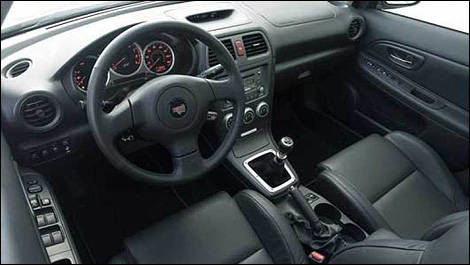 |
| 2006 Subaru WRX STI (Photo: Subaru) |