





How does Mitsubishi get that much output out of their 2.4-L engine? Not unusual the motor incorporates 16-valves and dual overhead cams, but the Japanese automaker has gone a step further with a system it calls MIVEC, which offers up two different cam profiles for the engine's dual intake valves, preparatory to the hydraulic actuator engaging a more radical lobe at 3,500 rpm. It reportedly feels like a low boost supercharger coming on at optimal engine revs, resulting in all the tractable power this little car needs. What's more, both fuel economy and emissions are improved.
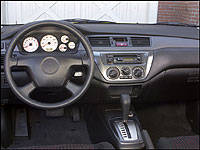 |
| Only available with a 4-speed automatic transmission, the Sportback offers a sophisticated driver-adaptive gearbox. (Photo: Mitsubishi) |
The car's only drawback may be a bonus to some. The Lancer Sportback is only available with a 4-speed automatic transmission. While perfect if you're already in the market for the convenience of an automatic, it'll be a downer for purists who won't be willing to give up their manual gearbox no matter how good the auto transmission is. And it should be impressive. Mitsubishi offers up a sophisticated driver-adaptive gearbox that reacts to a driver's input, offering up full redline performance, relaxed fuel miserly cruising or something in between.
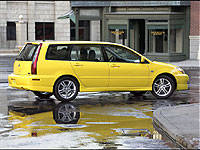 |
| The Ralliart Sportback will provide style and performance for a modest sum. (Photo: Mitsubishi) |
But in reality even sports wagons are compromise cars. Four-door sedans are generally stiffer and lighter, and usually prove the better track machines. But they can't haul as much gear and in today's unorthodox market, aren't as cool - go figure, velour is in again too. And the Lancer Sportback, particularly in Ralliart trim, deals up some pretty decent style for what will no doubt be a modest sum.