





Step Four: Maintain the cooling system of your vehicle.
A cooling system thermostat that causes the engine to run too cold will lower the fuel efficiency of a car by as much as one or two mpg. There also are improved radiator caps on the market today that allow the cooling system to operate at a higher temperature before boiling over, increasing the system's efficiency and reducing emissions.
Step Five: Watch your Tires.
Improper tire maintenance causes 1.5 million tonnes of CO2 to be released into the environment annually and is estimated to cost Canadian light-duty vehicle owners almost 643 million litres of fuel per year. At 99 cents per litre for regular unleaded gasoline, that amounts to $637 million a year in wasted fuel!
Tires that are not properly inflated add rolling resistance that makes the engine work harder to move the vehicle. Tire pressure should be checked at least monthly, including the spare. (Operating a vehicle with tires under-inflated by 20 per cent (8psi) can reduce their life by 15,000 kms and can increase fuel consumption by up to 4 per cent.)
Step Six: Green Driving Tips.
Aside from maintenance, your driving plays a big role as well. Jerky and aggressive driving can increase fuel consumption by as much as 37 per cent and also increases wear and tear on your vehicle. Avoid sudden starts and stops and go the speed limit.
Thinking ahead, getting directions and planning your errands in one trip will minimize unnecessary kilometers and will also make driving less frustrating and more relaxing.
1. Only use air conditioning when necessary as it causes vehicles to burn more fuel. As a rule, highway driving is a good time to use air conditioning because winding down your windows creates drag - forcing the engine to work harder. Parking in the shade and using a reflective windshield shade can keep your car cooler when parked, meaning it takes less to cool it off when you get back in.
2. Faster driving burns fuel more quickly. Increasing speeds from 100km/h to 120 km/h will cause a vehicle to consume about 20 per cent more fuel and contribute unnecessary CO2 to the environment. It is also less safe.
3. Cruise control can improve fuel consumption for most drivers by allowing their vehicles to maintain a constant speed. Cruise control should only be used on dry pavement and on straight roads in areas free of heavy traffic.
4. If you idle your car more than 10 seconds it burns more fuel than it takes to restart the engine. For the average vehicle with a 3-litre engine, every 10 minutes of idling costs over one quarter of a litre (over 1 cup) in wasted fuel.
Step Seven: Go Green, Clean and Lean
Visit http://www.carcarecanada.ca for a link to the free Family Road Trip Guide, which includes tips for saving gas and protecting the environment.
A cooling system thermostat that causes the engine to run too cold will lower the fuel efficiency of a car by as much as one or two mpg. There also are improved radiator caps on the market today that allow the cooling system to operate at a higher temperature before boiling over, increasing the system's efficiency and reducing emissions.
Step Five: Watch your Tires.
Improper tire maintenance causes 1.5 million tonnes of CO2 to be released into the environment annually and is estimated to cost Canadian light-duty vehicle owners almost 643 million litres of fuel per year. At 99 cents per litre for regular unleaded gasoline, that amounts to $637 million a year in wasted fuel!
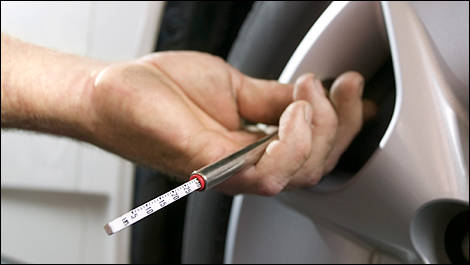
Tires that are not properly inflated add rolling resistance that makes the engine work harder to move the vehicle. Tire pressure should be checked at least monthly, including the spare. (Operating a vehicle with tires under-inflated by 20 per cent (8psi) can reduce their life by 15,000 kms and can increase fuel consumption by up to 4 per cent.)
 |
| photo: Jupiter Images |
Step Six: Green Driving Tips.
Aside from maintenance, your driving plays a big role as well. Jerky and aggressive driving can increase fuel consumption by as much as 37 per cent and also increases wear and tear on your vehicle. Avoid sudden starts and stops and go the speed limit.
Thinking ahead, getting directions and planning your errands in one trip will minimize unnecessary kilometers and will also make driving less frustrating and more relaxing.
1. Only use air conditioning when necessary as it causes vehicles to burn more fuel. As a rule, highway driving is a good time to use air conditioning because winding down your windows creates drag - forcing the engine to work harder. Parking in the shade and using a reflective windshield shade can keep your car cooler when parked, meaning it takes less to cool it off when you get back in.
2. Faster driving burns fuel more quickly. Increasing speeds from 100km/h to 120 km/h will cause a vehicle to consume about 20 per cent more fuel and contribute unnecessary CO2 to the environment. It is also less safe.
3. Cruise control can improve fuel consumption for most drivers by allowing their vehicles to maintain a constant speed. Cruise control should only be used on dry pavement and on straight roads in areas free of heavy traffic.
4. If you idle your car more than 10 seconds it burns more fuel than it takes to restart the engine. For the average vehicle with a 3-litre engine, every 10 minutes of idling costs over one quarter of a litre (over 1 cup) in wasted fuel.
Step Seven: Go Green, Clean and Lean
Visit http://www.carcarecanada.ca for a link to the free Family Road Trip Guide, which includes tips for saving gas and protecting the environment.