





Where it breaks from tradition in this field is at the wheels. The 1-Series transmission will send power down to the rear wheels instead of those in front. In effect, it revives a model size and overall similarity to the popular 1600 and 2002 series cars of the late 1960s and early '70s, at least in spirit.
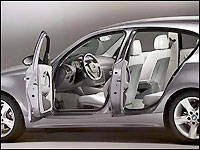 |
| The rear-wheel drive 1-Series, with its sporty looks and performance tuned handling, could attract a much younger buyer for BMW. (Photo: BMW Canada) |
If BMW North America decides to cash in on the memory banks of BMW enthusiasts, a car like the 1-Series, if only offered in its sportiest configurations and highest performance trim levels, could attract a much younger buyer, and one that wouldn't necessarily have bought into the MINI Cooper's front-wheel drive, retro styling theme.
Comparatively the 1 is hardly retro, with a very modern design theme that originates in the CS1 concept, a 2+2 convertible that BMW showed in 2002.
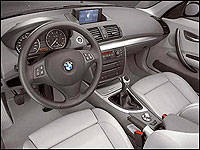 |
| No matter what the U.S. division decides, BMW Canada will most likely bring the 1-Series to market. (Photo: BMW Canada) |
According to BMW online bulletin boards, found within many of the brand's countless fan web sites, a significant number of enthusiasts are hoping that BMW brings the 1-Series into the U.S., even with a 2.0-liter 4-cylinder engine as the only power unit. Rising fuel costs could make a four-cylinder engine option much more palatable to North American consumers than ever before.
BMW Canada will most likely bring the 1-Series to market no matter what the U.S. division does, especially after Audi's recent news of its recently redesigned A3 coming to the Canadian market. Small cars do better here than south of the border, prompting DaimlerChrysler's smart division to offer the tiny two-occupant fortwo model (lower case intentional) in the fall of 2004.