





 |
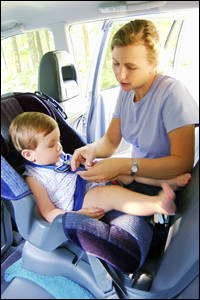
Once the transition is made, be sure the child can sit comfortably against the seat-back with legs bent off the edge. The seatbelt needs to cross the shoulder and middle of the child's chest, and the lap-belt needs to cross the hips, not the stomach. This will allow the seatbelts to do their job properly, and prevent them from causing more harm than good in the case of an accident. Seatbelts can be downright dangerous or ineffective if not used properly. Your youngster will probably fiddle around with the seatbelt on trips, so always ensure that they're securely fastened at all times.
When installing any child seat, be absolutely sure to read both the owner's manual from both the seat and the car itself. Installation may look relatively simple, but it needs to be exact in order for the seat to properly do its job. Keep the seat away from airbags where possible, and remember that kids under 13 are safest in the back seat of the car.
Avoid pre-owned car seats, and check them for a CMVSS (Canadian Motor Vehicle Safety Standards) sticker if you do pick one up. Be sure that it comes with proper instructions and all hardware necessary for proper installation. If your car is an older model, it may be possible to have a LATCH style tether anchor retrofitted. Your dealership has more information.
Ultimately, any caregiver, be it a parent, grandparent or babysitter, is responsible for ensuring their passengers are secured properly. If a child-seat is installed incorrectly, drivers may be ticketed and given demerit points- though it's a minor concern beside the increased potential of harm in an accident. If you're not totally sure whether your child seat is installed properly, your local health unit may offer a free inspection. After all, one can't be careful enough with kids on board.
photo:Jupiter Images