





"The major difficulty comes from thoroughly understanding the correlation between the virtual engineering world with the physical results measured on the track" told us Vincent Fraser, Vice-President PLM Solutions.
"We have worked with F1 teams that were not 100% sure of the parts that were fitted on their cars. Last winter, we were told that one team lost one day and a half of testing because they were running the car with the wrong set-up! Everything is so complicated that it's quite easy to take the wrong road or make bad calls when you don't have access to the proper information. The pace of development is frantic in Formula 1, much faster than any other domain that a team cannot afford to press on 'pause' and refocus for a month or two. In other words, it's like they were always running behind schedule. It's that tight," Fraser said to Auto123.com.
Processia will help McLaren in coping with the global economy, cost reductions within the F1 world, limited testing, wind tunnel and CFD constrains.
"How can we do better with less resources still under tremendous pressure? This is the new challenge we face today," said Andrew Bailey Head of Vehicle Design at McLaren Racing, a naval engineer by formation.
"We at Vehicle Design are given the aero model and we design the new car around it, integrating several systems and making sure the package is fully reliable. The process has to be extremely efficient. Today, simulation is the key to success in Formula 1. Simulation allows to get rid of several aerodynamic and mechanical components that will never work. We then only focus on the parts that are expected to give significant results," Bailey added.
"We must become leaner and more efficient, that's why we have asked the expertise of Processia Solutions. Their involvement helps us reduce costs and waste. For example, saving just one hour in our engineering process can make a crucial difference on a race weekend."
Processia's consultants have a unique opportunity to work in an extreme engineering environment where everything is done to push the boundaries of innovation.
They work at the McLaren Technology Centre in Woking UK. "We come from a different background. So, we see things differently," told us one consultant who works directly with Jenson Button's race engineer.
"Sometimes they do things in a certain way just because it's part of their motorsport culture. We are there to show them new, innovative way to automate and to improve their processes based on competitive information systems that will help them design and validate more components, solve problems quicker with real time access to integrated design, simulation and real world data and to track the car configuration from the preliminary design to the full car setup during race weekends including the logistic of sending two complete cars, 30 tons of equipment and 45 people to every race. It is a highly exciting challenge for us".
photo:McLaren Group
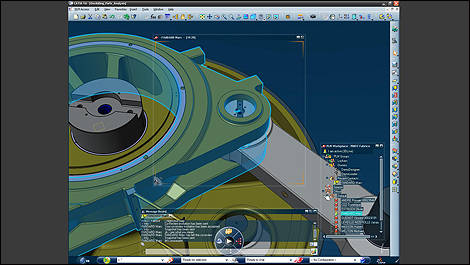 |
| Designing parts using Catia V6. Photo: Processia Solutions |
"We have worked with F1 teams that were not 100% sure of the parts that were fitted on their cars. Last winter, we were told that one team lost one day and a half of testing because they were running the car with the wrong set-up! Everything is so complicated that it's quite easy to take the wrong road or make bad calls when you don't have access to the proper information. The pace of development is frantic in Formula 1, much faster than any other domain that a team cannot afford to press on 'pause' and refocus for a month or two. In other words, it's like they were always running behind schedule. It's that tight," Fraser said to Auto123.com.
Processia will help McLaren in coping with the global economy, cost reductions within the F1 world, limited testing, wind tunnel and CFD constrains.
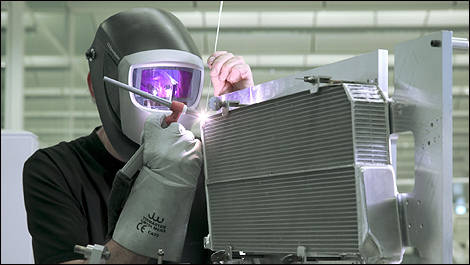 |
| Processia will help McLaren to produce components faster. Photo: McLaren Group |
"How can we do better with less resources still under tremendous pressure? This is the new challenge we face today," said Andrew Bailey Head of Vehicle Design at McLaren Racing, a naval engineer by formation.
"We at Vehicle Design are given the aero model and we design the new car around it, integrating several systems and making sure the package is fully reliable. The process has to be extremely efficient. Today, simulation is the key to success in Formula 1. Simulation allows to get rid of several aerodynamic and mechanical components that will never work. We then only focus on the parts that are expected to give significant results," Bailey added.
"We must become leaner and more efficient, that's why we have asked the expertise of Processia Solutions. Their involvement helps us reduce costs and waste. For example, saving just one hour in our engineering process can make a crucial difference on a race weekend."
Processia's consultants have a unique opportunity to work in an extreme engineering environment where everything is done to push the boundaries of innovation.
They work at the McLaren Technology Centre in Woking UK. "We come from a different background. So, we see things differently," told us one consultant who works directly with Jenson Button's race engineer.
"Sometimes they do things in a certain way just because it's part of their motorsport culture. We are there to show them new, innovative way to automate and to improve their processes based on competitive information systems that will help them design and validate more components, solve problems quicker with real time access to integrated design, simulation and real world data and to track the car configuration from the preliminary design to the full car setup during race weekends including the logistic of sending two complete cars, 30 tons of equipment and 45 people to every race. It is a highly exciting challenge for us".
photo:McLaren Group