





The lap times recorded are then corrected by integrating variations in grip.
The fuel load has an exponential influence on lap times. This will be critical this year as fuel stops will be forbidden. Moving from 20 to 40kg of fuel in the car may, for example, slow it down by 3/10ths of a second a lap. However, moving from 100 to 120kg will slow the car down by a full second. The more fuel in, the slower the car is.
The engineers will also note tire and brake wear after each run.
Once all these data and number are crunched in, the engineers will be able to calculate accurately the influence of fuel on lap times.”
photo:Williams, Ferrari, WRI2
The fuel load has an exponential influence on lap times. This will be critical this year as fuel stops will be forbidden. Moving from 20 to 40kg of fuel in the car may, for example, slow it down by 3/10ths of a second a lap. However, moving from 100 to 120kg will slow the car down by a full second. The more fuel in, the slower the car is.
The engineers will also note tire and brake wear after each run.
Once all these data and number are crunched in, the engineers will be able to calculate accurately the influence of fuel on lap times.”
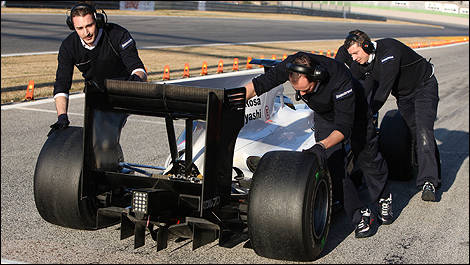 |
photo:Williams, Ferrari, WRI2