





Toyota is bullish on the new partnership with Ford, stating that it is considering supplying other automakers with the technology as part of its goal to produce 300,000 HEVs per year by mid-decade.
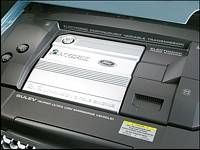 |
| The Ford Escape makes use of a full hybrid system, components of which are being supplied by the current leader in HEV technology, Toyota. (Photo: Ford Motor Company of Canada) |
While philanthropic on the surface, Toyota not only will produce more HEV hardware, the economies of scale which will increase profits for its own hybrid program, but also has the potential of becoming the Microsoft of HEVs, cornering the production market for components that could inevitably become instrumental in fuel cell applications.
On this subject Toyota previously inked a deal with number one competitor Nissan Motor Co. in 2002, a much more comprehensive licensing agreement.
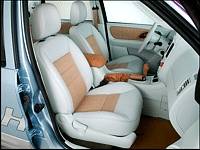 |
| While using some Toyota technology, Ford said its hybrid system would feature more than 100 unique patents. (Photo: Ford Motor Company of Canada) |
Under this current agreement, Toyota's patents on its gasoline-electric hybrid engine system have been licensed to Ford for its hybrid system. While the U.S.-based company is using some Toyota technology, Ford said its hybrid system would feature more than 100 unique patents.
The Toyota components are mated up with Ford's Duratec 2.3-liter 4-cylinder gasoline, and are said to deliver similar performance to the Escape fitted with the Duratec 3.0-liter V6 engine, but with even better fuel economy and lower emissions than the base 4-cylinder on its own.