





The Sit-N-Lift seat replaces the right-side second row bucket in an extended wheelbase minivan, and it's operated by a simple hand-held remote control unit. The seat faces forward in the second row behind the front passenger seat, but it turns when it powers in and out of the vehicle. It's very simple to use, either by the person in the seat or by another person.
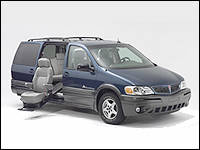 |
| Sit-N-Lift turns the seat sideways as it powers out of the vehicle, and can be stopped at a variety of different heights. (Photo: General Motors) |
GM designed considerable robustness into the Sit-N-Lift, Talbot says, using synchronized dual motors for a smooth operation, a double-chain system to cut out any noise, and the electrical system is integrated into the vehicle.
Installation of the Sit-N-Lift costs extra on an existing vehicle, but it takes less than two hours.
It's easy to order the Sit-N-Lift on a new vehicle, Talbot says, because "it's in the Vehicle Order Guide just like mud flaps used to be."
All of this adds up to a "tremendous win for our community," says Talbot, who has been wheelchair-bound since a car crash many years ago.
In Talbot's view, the list of people who can use the Sit-N-Lift is extensive, including just about anyone of any age who isn't able to get into a vehicle without assistance.
"There are lots of people who could use a little help," Talbot says. Sit-N-Lift is "focused on the caregiver's side, rather than on a personal use vehicle."
Sit-N-Lift is designed to power out of the vehicle and can be stopped at different heights, Talbot says, and that allows the caregiver to slide someone out of a wheelchair down onto the seat or out of the seat down into the wheelchair.
In speaking to consumers who need this kind of system, Talbot has found that not being able to find or afford the right kind of device has restricted a lot of peoples' mobility.