





So which company ranks last? Ironically it's GM's Japanese Isuzu division that brings up the tail with a dismal 3.5 percent. What makes it even more ironic is that the brand's biggest seller is its Ascender SUV, a near clone of Chevy's TrailBlazer that placed among the highest in the study. Isuzu vehicles are no longer available in Canada.
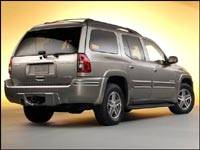 |
| Ironically GM's Japanese Isuzu division ranked last, with a dismal 3.5 percent. What's even more ironic is the brand's top seller is a virtual clone of Chevy's TrailBlazer, that placed near the top of the study. (Photo: General Motors) |
Another GM affiliate, Suzuki, does much better at 20.7 percent but places second from last just the same. Ford's Japanese division Mazda fairs poorly too, with only a 22.2 percent retention rating. No doubt Mazda's placement will pick up with the recently launched Mazda3.
Another surprise was Volvo. It's 31.9 percent score placed last among European brands, losing out to Saab and Volkswagen which both scored under 40 percent retention.
J. D. Power and Associates compiled the study based on information taken from 177,000 recent new vehicle purchasers.
So what do the results mean? Are retention rates always indicative of group of customers' collective satisfaction with a specific brand or the sales and service experience its dealers offer? Yes but not necessarily, according to Joe Ivers, a J. D. Power and Associate's partner. He states that one of the strongest persuaders for changing brands is when a specific nameplate doesn't offer a vehicle type the customer is interested in.