





Bob Lutz, GM's vice-chairman and product chief, said "We'll see a real convergence in our passenger cars and crossovers and car-based utilities, and that will give them a more global flavor. Once the architecture is situated everywhere around the globe, any member of that family of vehicles could be built anywhere."
It'll take several years to get this new architecture in place around the world, Lutz said, but when it is, it's possible that the niche models might be built locally in several countries, rather than in one place and shipped globally.
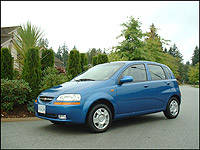 |
| "We'll see a real convergence in our passenger cars and crossovers and car-based utilities, and that will give them a more global flavor." (Photo: Alexandra Straub, Canadian Auto Press) |
Or, the CAMI plant could become the central location for the various sport-cutes on the Theta architecture and would build SUVs for markets around the world.
This would be in line with what Lutz called GM's "homeroom" strategy, which has a region taking the lead in creating a particular type of vehicle. According to Lutz, the "homeroom" strategy was developed over the last year and is a key ingredient in what he and GM president Rick Wagoner call a "one GM" policy.
According to Lutz, this policy "encourages GM to operate as one global company as opposed to a federation of regional companies pursuing their own thing."
GM doesn't want to build "world cars" that could be sold anywhere, Lutz said, but rather "global cars" that could be built around the world and amended to suit the tastes of various local markets.
With GM of Canada currently silent on the specifics for the future of our market, the exact details of what this will mean to Canadian consumers are not clear. But it's plain that there's a chance we'll be getting at least a few more interesting models from the world's biggest car company.