





Its main incentive is that it's MUCH cleaner than regular diesel, the fuel of choice for buses, trains and large transport vehicles. Its dominance in the heavy vehicle market is due to enhanced engine durability and the capacity to withstand extensive, continuous use compared to gasoline and natural gas engines. But diesel has high levels of sooty particulates (visualize the black smoke coming out of buses), nitrous oxides (source of the brown haze that covers the Fraser Valley on windless summer days), sulphates (think acid rain), polycyclic aromatics and unburned hydrocarbons (just know they're bad for you).
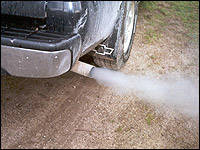 |
| One of the main advantages of biodiesel is that is much cleaner than regular diesel exhaust, like the one shown here. (Photo: Susan Powelson, Canadian Auto Press) |
Consider the following advantages and challenges to biodiesel:
Advantages
- Biodiesel is produced domestically and would strengthen our agricultural economy.
- Renewable fuel made from feedstock considered waste.
- Biodegradable and non-toxic.
- Significantly reduces harmful tail pipe emissions - not to mention they smell better!
- Little or no retrofitting of existing diesel vehicles is required.
- Tax incentives - nearing final approval in the U.S. and last year the Ontario government announced exemption from the 14.3¢/litre provincial fuel tax.
Disadvantages and Challenges
- It's not a household word, so increased awareness is key.
- No consensus on best combinations of chemical and mechanical additives to optimize emissions.
- Issues with use in cold weather conditions.
- Availability - of both the fuel source and final product at the pump.
- Price consistency - the price fluctuations of the fuel source (i.e. soybeans) and the refining costs affecting the final pump price.
- Jury still out on long-term affects to the vehicle using pure biodiesel instead of a petroleum/organic blend.