





Since the first HEV hit the market in model year 2000, sales have increased over 570 percent with a compound annual growth rate of 88.6 percent.
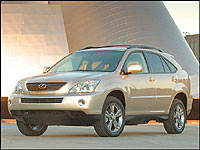 |
| "New hybrid offerings will expand the market and appeal of hybrid vehicles to a larger consumer base." (Photo: Lexus) |
As expected, Los Angeles, CA led all markets for HEV registrations, with a total of 4,701. Second at 4,024 registrants was Washington, D.C., with San Francisco/Oakland/San Jose, CA taking third place with 3,813 new hybrid owners. Fourth was New York City, NY at 1,768 new environmentally correct owners while 1,700 Seattle/Tacoma, WA residents bought into the trend.
"Hybrid buyers have some important differences when compared to buyers of gasoline engine vehicles," Miller added. "They are slightly older on average, and their average income is higher. We're also seeing hybrid vehicles drawing more interest from women, on average, than traditional gasoline-powered vehicles."
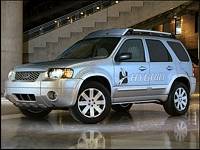 |
| The popularity of HEVs is a definite sign that the times are changing, and people are searching for alternatives to conventional combustion engines. (Photo: Ford Motor Company of Canada) |
Woman make up 38.8 percent of all HEV buyers, according to Polk, compared to 36 percent of gasoline-only powered cars, light trucks and SUVs. The average hybrid buyers' age of either sex is 49.6 years, with 47.6 being the average age of conventional internal combustion engine (ICE) vehicles. What about income? The spread is even greater, at USD$78,350 for HEV buyers compared to USD$71,576 to ICE registrations.
While HEVs are considered by most to be a stopgap measure until hydrogen powered vehicles become feasible in all markets, their popularity is a definite sign that the times are changing. In order to be considered forward thinking in today's world, automakers need to have a hybrid gasoline-electric vehicle on the market, or at least coming soon.