





"The Rouge is an example of our lean, next generation, flexible manufacturing--a new way of making cars and trucks in the new century," he said. "The Dearborn Truck Plant will be the company's most flexible plant worldwide and will be home to the new Ford F-150."
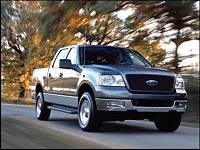 |
| "The Dearborn Truck Plant will be the company's most flexible plant worldwide and will be home to the new Ford F-150." (Photo: Ford Motor Company) |
Flexible manufacturing--the ability to make more than one model with different chassis (architecture or platforms) on the same assembly line--is the current goal of many car manufacturers, rather than having an assembly plant that is dedicated exclusively to one model (or two or three models that are basically the same with a few sheet metal changes). This allows an auto manufacturer to quickly change its production schedules to meet consumer demand. The Dearborn Truck Plant, for example, was designed to produce up to nine models off of three different platforms, such as the F-150 platform, the Ranger pickup, and possibly a crossover vehicle.
To allow for flexible manufacturing, the plant will exclusively use "skillet conveyors" instead of a traditional chain-driven line. These skillets are special platforms that the vehicle sits on as it travels down the line. One type is called a "smart" skillet, because it raises and lowers the vehicle automatically so workers will no longer have to stoop or work in pits to attach parts. Basically, it brings the work to the people. Other "dumb" skillets stay at the same level for jobs that don't require the vehicle to be raised or lowered.
Ford is trying to implement flexible manufacturing at many of its North American assembly plants, such as its Norfolk (Va.) factory where the first production 2004 F-150s rolled off the Norfolk Assembly Plant in early June.
Next Week: Built as a Model of Sustainable Development, Plan Includes Restoring Historic Features, and Renovation Inspired by Green Architect