





Kahn-designed buildings were not torn down to make room for the new plant either, he said.
"We're the ones who insisted that the (Kahn-designed) Glass Plant should be saved," McDonough said. "It was covered up with metal and no one knew it was there. In our original master planning sessions, people were saying: 'we can tear this down and that down.'
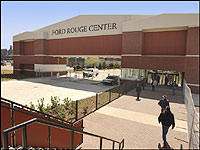 |
| The biggest surprise on the renovation project was the awesome scale of the operation. (Photo: Ford Motor Company) |
"I said, 'Wait a minute. The Glass Plant is one of the most important buildings in the history of architecture.' So then, people proposed to re-glaze it with aluminum. But, it's a very famous steel and glass building. Our firm found the original steel window manufacturers for that building in London--Crittall Windows Ltd."
It was a cost neutral decision to begin restoring the building to original shape. Crittall was able to make double glazed windows for about the same price as aluminum siding would have cost.
Surprised by the Scale, Moving Ahead
The biggest surprise on the renovation project was the awesome scale of the operation, McDonough said.
"For example, when we looked at putting vines on the building to produce a habitat, along with providing shade for the building and wind buffering... we looked at putting up a wire trellis every two feet for the vines to climb up," he said. "We thought, that was pretty simple and thought, how much could that cost? It was $13 million, because it's so big. It would have cost as much as the whole storm water system."
So, instead of abandoning the idea entirely, the team came up the idea of using inexpensive nylon mesh, like a fish net to let the vines grow up the sides of the factory. But then, they had to think about how to grow vines in nylon and how to separate the biological and technical matter in the future.
"We design everything for disassembly," McDonough explained. "The vines can be composted out to recover the nylon, or a light acid could be used to turn all of it into fertilizer. It was fun to explore the puzzles of the future and come up with practical solutions."