




Still, GM, Ford and DCX need to control costs, with the whole benefit side of the contract negotiations being unique because health care benefits are not considered taxable income, Jackson said. The companies are pushing for co-pay arrangements where the workers would pay for a portion of their own medical bills. That would reduce costs to the automakers, but it would take an even bigger bite out of worker's pockets.
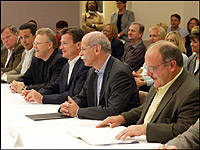 |
| DaimlerChrysler President and CEO Dieter Zetsche, third from right, Chrysler Group COO Wolfgang Bernhard, fourth from right, and DaimlerChrysler Senior Vice President, Employee Relations John Franciosi second from right, were part of the company team to welcome members of the United Auto Workers to the bargaining table at DaimlerChrysler's Auburn Hills headquarters. (Photo: DaimlerChrysler) |
The union will say no to co-pays, but wink and let the Big Three close plants, Whitty said. Even if the UAW agreed to co-pays it would probably not save any factories.
"The UAW and the Big Three have to accede to the economics of scale and global overcapacity and the long-term shrinkage of their unionized partners -- that includes Canada too," he said. "There will be closings in Michigan -- some big ones in towns and counties that rely on factory payrolls. Those laid off workers who are willing to move, may find work in other plants, in other areas of the country or, in some cases, in new plants."
Pro-Life Demonstration Against the UAW
On a rainy, cold August 29 day outside the gate to the UAW Solidarity House, located on Woodward Avenue, 32 protesters demonstrated against the union for its purported effort to include voluntary abortions as a health care benefit as part of the contract talks with the Big Three. The protest was organized by a Catholic organization called Citizens for a Pro-Life Society and there was an effort by pro-life members to phone Gettelfinger's office to complain about the UAW's stance.