





Why the massive shift to the bottom of the grid? It can only be attributed to initial quality problems with the new Cayenne, Porsche's dynamic new sport utility vehicle that now makes up more than half of its sales. While
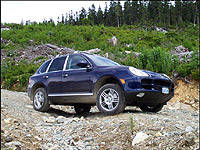 |
| While the Cayenne is critical to Porsche's bottom line, the fact that the new SUV incorporates a large proportion of Volkswagen components no doubt hurts the legendary brand's overall IQS rating. (Photo: Shawn Pisio, Canadian Auto Press) |
But at least Volkswagen isn't dead last, that notoriety belongs to GM's Hummer division which shows no improvement in placement when compared to last year's survey despite showing a significant rise in initial quality from an abysmal 225 problems per 100 units to 173. Off-road competitor Land Rover, however, that found itself placed a single position ahead of Hummer last year, has jumped significantly forward in the points to 28th out of 37 nameplates (from 190 to 148 PP100). This news should make the recently appointed head of Ford Motor Co.'s Premier Automotive Group (PAG) Mark Fields, that organization that oversees Land
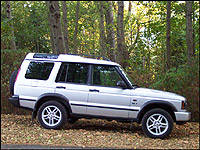 |
| Land Rover made considerable strides from last year, charging up the charts from second worst place to 28th out of 37 nameplates. (Photo: Shawn Pisio, Canadian Auto Press) |
Other premium manufacturers that show improvement from 2003 to 2004 are Land Rover's kissing cousin Jaguar, also part of the Ford's PAG, that pulled itself up from an already strong 10th place to an amazing 3rd (from 122 to 98 PP100), bested only by Lexus in 1st (from 76 to 87 PP100) and Cadillac in 2nd (from 103 to 93 PP100), both not budging in placement from their impressive 2003 survey results in this year's IQS. It should be said, however, that while Jaguar and Cadillac moved up with regards to problems per 100 vehicles, Lexus experienced an average of 11 additional problems.