





While Toyota and Honda have been under attack from some motoring media scribes for enacting this new hybrid philosophy, citing real world
fuel consumption results that aren't anywhere near as optimistic as the EPA estimates suggest (which is par for the course with EPA ratings for most conventionally-powered vehicles), such reporters are missing the entire point. The Highlander Hybrid is all about performance, with the added benefit of reasonably good fuel economy and, of course, its "green" attributes.
There has been some talk among HEV insiders that a driver controlled system is on the way, which would optimize fuel savings when "dialed in" to do so, or performance if out-accelerating your stoplight neighbour is needed. Such a system would be flexible enough for one vehicle and engine configuration to meet the needs of multiple driving styles, and in-turn, reduce production costs overall.
And if Toyota wants this or any other technology to become popular, it has ample capitalization to make sure its plans are carried out; which is the
real reason consumers shouldn't be concerned about any negative implications that may or may not revolve around jumping on the hybrid bandwagon.
Still, there are factors outside of Toyota's direct control that could keep the automaker from reaching its short and long-term goals, the first being a shortage of hybrid parts; a problem that has plagued the company throughout the year. Watanabe's predecessor, Fujio Cho, had previously set his sights on 300,000 HEV unit sales globally for 2005, but the automaker is currently only on target for 240,000 to 250,000 deliveries. According to Jim Press, Toyota Motor Sales, U.S.A. VP of sales, a lack of batteries and other components are the cause of the problem.
Still, Toyota most likely has plans to overcome such setbacks, reach its 400,000 HEV units sales by year-end 2006, and then on past 1 million hybrid models per year by 2010 - its longer-term target. And who can stop them. GM? Ford? DaimlerChrysler? Not likely. Toyota's lead is too long, it's technical know-how too rich, and pockets too deep for any competitor, less Honda, to put up a significant threat.
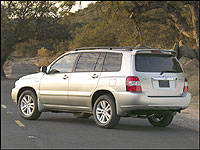 |
| The Highlander Hybrid is all about performance, with the added benefit of reasonably good fuel economy. (Photo: Toyota Canada) |
There has been some talk among HEV insiders that a driver controlled system is on the way, which would optimize fuel savings when "dialed in" to do so, or performance if out-accelerating your stoplight neighbour is needed. Such a system would be flexible enough for one vehicle and engine configuration to meet the needs of multiple driving styles, and in-turn, reduce production costs overall.
And if Toyota wants this or any other technology to become popular, it has ample capitalization to make sure its plans are carried out; which is the
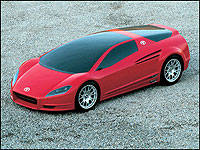 |
| Toyota's lead is too long, it's technical know-how too rich, and pockets too deep for any competitor, less Honda, to put up a significant threat. (Photo: Toyota Canada) |
Still, there are factors outside of Toyota's direct control that could keep the automaker from reaching its short and long-term goals, the first being a shortage of hybrid parts; a problem that has plagued the company throughout the year. Watanabe's predecessor, Fujio Cho, had previously set his sights on 300,000 HEV unit sales globally for 2005, but the automaker is currently only on target for 240,000 to 250,000 deliveries. According to Jim Press, Toyota Motor Sales, U.S.A. VP of sales, a lack of batteries and other components are the cause of the problem.
Still, Toyota most likely has plans to overcome such setbacks, reach its 400,000 HEV units sales by year-end 2006, and then on past 1 million hybrid models per year by 2010 - its longer-term target. And who can stop them. GM? Ford? DaimlerChrysler? Not likely. Toyota's lead is too long, it's technical know-how too rich, and pockets too deep for any competitor, less Honda, to put up a significant threat.