





But while no official announcement has been made, Toyota is on record stating that it has plans of producing 300,000 hybrids annually by mid-decade, and it would be difficult for the automaker to reach such a lofty target with just Prius, Highlander Hybrid and Lexus RX400h sales alone.
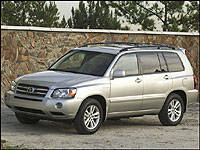 |
| With a target of 300,000 hybrids per year by 2005, Toyota will need something like the Camry to add to it's current Prius, Highlander Hybrid (shown) and Lexus RX400h lineup. (Photo: Toyota Canada) |
What's more, the current Prius, originally produced in its own facility, is now built alongside Toyota's gasoline-only powered models, as will be the two upcoming SUVs. It only makes sense that Toyota would want to extend hybrid use into other segments of the market, especially now that rival Nissan will be entering the midsize category with its Altima hybrid. Toyota, of course, has much invested in Nissan being successful, as the Japanese number-two automaker will use a version of number-one Toyota's Hybrid Synergy Drive system, as previously mentioned.
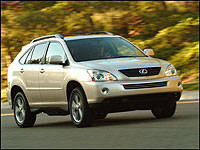 |
| If the current rise in oil prices maintains an upward trajectory, demand for hybrids like this Lexus RX 400h should steadily rise as well, and Toyota will be there to supply to market. (Photo: Toyota Canada) |
Rival Honda has plans in the works for an Accord hybrid to be sold into the North American market this coming fall, but for the most part Honda's hybrid sales numbers are nowhere near Toyota's, according to the report, which dilutes its threat. Honda's Accord Hybrid will also be a mild-hybrid, following the lead of its current hybrid production cars, which will also diminish the car's desirability to the highly educated eco-minded target consumer.
Costs for consumers to adapt to the technology have been its major drawback, but according to the Reuters report analysts feel that Toyota should be capable of reducing costs by the Camry hybrid's 2006 target line-off, making it advantageous for prospective customers to go green. If the current rise in oil prices maintains an upward trajectory consumers will have yet another reason to adopt hybrid technology.