





According to this same source the Series III Discovery will keep its general size intact, but its wheelbase will be stretched. This is good for ride quality and interior room, and also will allow for shorter overhangs and therefore improved approach and departure angles when off-road, but the longer wheelbase will mean more hang-ups when attempting to scale oversized obstacles.
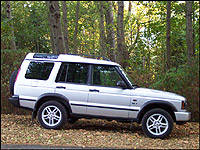 |
| The Series III will be about the same general size as the current Discovery shown here. (Photo: Shawn Pisio, Canadian Auto Press) |
The new truck will get an independent front and rear suspension set up, with top-line models featuring air-springs. Land Rover doesn't have to go far to find air suspension componentry, having offered the sophisticated setup in its top-tier Range Rover for years. An air-suspension will help the new Disco compete more effectively with Volkswagen and Porsche that offer their own adjustable suspensions to increase ride height when off-road.
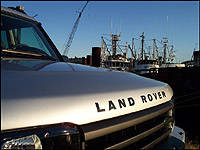 |
| Diehard Land Rover fans won't complain about the Discovery's current inefficient 4.6-L V8 engine being replaced. (Photo: Shawn Pisio, Canadian Auto Press) |
One thing that shouldn't upset too many diehard LR fans is the loss of the inefficient 4.6-L V8 engine. The old mill is short on power and only moderately capable when it comes to torque production, while guzzling gas like there's no tomorrow. Land Rover will replace it in 2005 with a version of Jaguar's 4.2-L V8, which produces upward of 300 horsepower in XJ8 trim and 400 when harnessed with a supercharger in the XJR. There's no reason why Land Rover wouldn't take advantage of Jag's R powerplant, and build a very special version of the new Disco.
A new 6-cylinder engine will also be available, sourced from Jaguar as well. Being that BMW, Volkswagen and even Porsche are tempting the North American SUV market with lower priced V6 models, there's a good chance Land Rover will do likewise. Whether V6 or V8, all Discoverys are expected to arrive with a state-of-the-art 6-speed automatic gearbox.