





Fifty-Five Percent of SUV Accidents Involve Rollovers
It's a lesson you can only learn for yourself once, and by then it's too late. Still, despite publicity campaigns by automakers and government safety bodies alike touting the importance of wearing seatbelts while driving, a total of 58 percent of U.S. motorists killed in 2003 weren't buckled up. What's more, 40 percent of all motor vehicle related deaths involved alcohol.
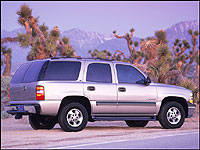 |
| Despite all the seatbelt safety publicity, a total of 58 percent of U.S. motorists killed in 2003 weren't buckled up. (Photo: General Motors of Canada) |
"We need the cooperation of every American to drive responsibly, fasten his or her safety belt and care for each other's safety on the roads," said U.S. Department of Transportation's National Highway Traffic Safety Administration (NHTSA) administrator Jeffrey Runge, M.D. "Although we are seeing progress in some areas, our nation must take this epidemic seriously," added Dr. Runge. "Traffic crashes are the leading cause of death in American children and young adults, but that can change through personal responsibility and enforcement of laws and regulations."
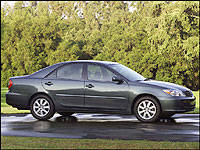 |
| Passenger car deaths declined as well, by 778 individuals, while sport utility fatalities went up by 456. (Photo: Toyota Canada) |
The NHTSA report, which didn't relate how many fatalities involved both alcohol and the non-use of seatbelts, did state, however, that fatalities on U.S. roadways increased in 2003 from 42,815 persons to 43,220. On the positive, injuries from MVAs declined to the lowest levels since such data has been recorded.
Passenger car deaths declined as well, by 778 individuals, while sport utility fatalities went up by 456. Incidentally, 55 percent of SUV crashes involved rollovers. To be clear, a rise in SUV sales should be factored into the increase in deaths caused by accident in the class. Another alarming figure was an 11 percent increase in motorcycle fatalities, possibly related to the increase in large vehicle sales as well.
All automakers can take some credit for the declining fatality and injury rate in passenger cars, being that much has been expended to make new vehicles more crashworthy than previous models. No matter how safe they make them, however, nothing will compensate for the stupidity of the drivers who continue to snub safety concerns by neglecting to wear their seatbelts or even worse, turn their vehicles into weapons of mass destruction by driving while under the influence of alcohol.