





But what is even more astounding is the release VW sent out that shows just what it takes to compete at this event, at this level.
It really puts it into perspective. For a start, they have 12 tents just for 'offices' and 'race shops' for the Touaregs that have to be set up and dismantled every day. Kleinschmidt has done this event 15 times. There are 25 tons of spare parts and equipment transported in seven Volkswagen team trucks, including 400 wheels already fitted with tires, and those seven trucks are part of a 28 vehicle fleet. Volkswagen also has sent 78 team members, including doctors that have 50 square meters of bandages, and over 1,000 painkillers. Those team members will use up 1,560 team shirts, and consume over 2,000 ready made soups and snacks.
A total of 508 participants start in Lisbon: 240 motorbikes, 188 cars and 80 trucks, and an additional 240 vehicles form the accompanying vehicle armada at the Dakar Rally. Add to that over 500 hours of television coverage - in Canada it airs on Speed TV - and there are more journalists than competitors - 780 have been issued credentials.
The final staggering numbers? Here in Canada, gas is hovering on the one
dollar per litre mark. Volkswagen will use 78,000 litres during the event - do the math. That could well be the best description for 'commitment' to a motorsport event, so what has Volkswagen achieved with all this outlay? Well after the first two stages, they have the lead. Works driver Carlos Sainz, famed for years of leadership in WRC, leads the desert classic in his Race Touareg 2 by 1 minute 30 seconds after the first stage in Portugal, on his "Dakar" debut no less. Local matador Carlos Sousa lies second in a Nissan. With VW's Bruno Saby in third position followed by team mate Jutta Kleinschmidt. Three of the five Volkswagen works drivers are among the top four of the 174 competing teams.
"I'm satisfied to have set the fastest time at the very beginning. The conditions were everything but easy: A junction was difficult to see and we actually had to turn-back. That's why the result is all the more satisfying," Sainz said after the first stage.
American Mark Miller is 10th in his Touareg.
"I'd set out to size-up the rally on the European stages, which definitely paid off since the grip level was difficult to judge under these conditions. The Race Touareg 2 ran perfectly."
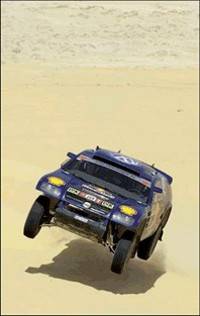 |
| A total of 508 participants start in Lisbon: 240 motorbikes, 188 cars and 80 trucks. (Photo: Volkswagen Canada) |
A total of 508 participants start in Lisbon: 240 motorbikes, 188 cars and 80 trucks, and an additional 240 vehicles form the accompanying vehicle armada at the Dakar Rally. Add to that over 500 hours of television coverage - in Canada it airs on Speed TV - and there are more journalists than competitors - 780 have been issued credentials.
The final staggering numbers? Here in Canada, gas is hovering on the one
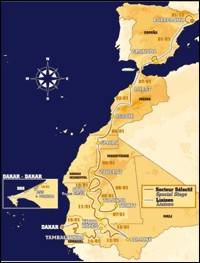 |
| Volkswagen will use 78,000 litres during the event that runs from Lisbon, Portugal to Dakar, Senegal. (Photo. Dakar.com) |
"I'm satisfied to have set the fastest time at the very beginning. The conditions were everything but easy: A junction was difficult to see and we actually had to turn-back. That's why the result is all the more satisfying," Sainz said after the first stage.
American Mark Miller is 10th in his Touareg.
"I'd set out to size-up the rally on the European stages, which definitely paid off since the grip level was difficult to judge under these conditions. The Race Touareg 2 ran perfectly."