





The new Volvo-destined Yamaha V8 will feature the all the latest technology, most likely including variable valve timing, and manifolds as indicated by its high horsepower to
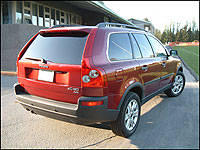 |
| With pressure from all sides, it's not surprising Volvo believes they need a V8 engine to stay competitive. (Photo: Rob Rothwell, Canadian Auto Press) |
The decision to charter a V8 for the XC90 lineup was seemingly triggered by the immediate competition - Saab's upcoming 9-7X, as well as the aforementioned SUVs from premium competitors BMW, Mercedes-Benz, Porsche and Volkswagen. If the information stated in USA Today can be trusted, Volvo's response to Saab's new SUV should be a great deal more sophisticated, the 9-7X merely making do with an unmodified version of General Motors' 5.3-liter OHV pushrod V8.
With the introduction of a V8 engine into Volvo's motor lineup, plenty of doors for other applications will be
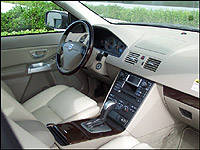 |
| If the V8 engine becomes a reality, it is expected to account for 10-12,000 sales annually. (Photo: Rob Rothwell, Canadian Auto Press) |
It doesn't take too much in the way of speculation to foresee Volvo escalating power via forced induction either, turbocharging being the brand's usual method for extracting performance out of its small displacement engines. A turbocharged 4.4-liter V8 could easily reach 400 horsepower, raising its 60 and 70-series R cars to equal par with the likes of Audi's RS6, BMW's M5 and Cadillac's new CTS-V.
In the meantime the new engine is urgently needed to help the XC90 compete with upper-echelon sport utility vehicles. If the engine becomes a reality, with industry insiders believing it could show up as soon as one year from now, it is expected to account for 10-12,000 sales annually.