





Variably Adjustable Intake and Exhaust Camshafts an Industry First for V6
The current 6-cylinder SLK, while wonderfully refined and extremely sporty, is underpowered unless tuned to AMG specifications. The SOHC 3-valve power unit only develops a meager 215-hp in a market segment that includes the 225-hp BMW Z4 3.0, 240-hp Honda S2000 and 287-hp Nissan 350Z Roadster.
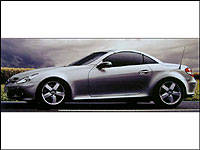 |
| Mercedes Benz has created an updated 6-cylinder engine for its soon to be unveiled all-new SLK. (Photo: jesmb.de) |
M-B fans will no doubt be excited to hear that the German premium brand has created an updated 6-cylinder engine for its soon to be unveiled all-new SLK, with a much more serious 3.5 liters of displacement.
While it is quieter and more fuel efficient than the model it replaces, the new engine boasts 272-hp and 258 lb-ft (350 Nm) of torque, placing it near the top of its class. Maximum torque is available from as low as 2,500 rpm and remains constant right up to 5,000 rpm, which should make the new roadster as effortless to commute through stop and go traffic as it will be entertaining on the open road.
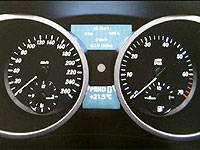 |
| This new SLK tachometer will be spinning quicker with the German brand's hot new 3.5-L V6. (Photo: jesmb.de) |
Mercedes arrives at its impressive output figures via variably adjustable intake and exhaust camshafts, an industry first as applied to V6 engine configurations. Adding to this technological tour de force is a two-stage intake manifold, tumble flaps in intake ducts plus an intelligent heat management system.
What's so intelligent about it? Mercedes has designed a continuously active electronic map-controlled thermostat, which directs inner heat flow throughout the engine so that engine oil and coolant are kept at optimal temperatures.
Keeping the engine's temperature just right is especially important as its crankcase and cylinder heads are now aluminum. The weight has been reduced internally too, with new lighter connecting rods, pistons and balancer weights.
Mercedes lines the new engine's cylinders with aluminum-silicon liners said to offer "particularly low friction, distortion and weight."
Due to the aforementioned technologies, plus internal exhaust gas recirculation, secondary air injection, etc, the engine's exhaust emissions are extremely low, even to Europe's 2005 EU 4 limits.
Without a doubt this new engine will become available in more models than just the brand's next-generation SLK. Expect it to show up in various states of tuning throughout the Mercedes-Benz 6-cylinder range.