


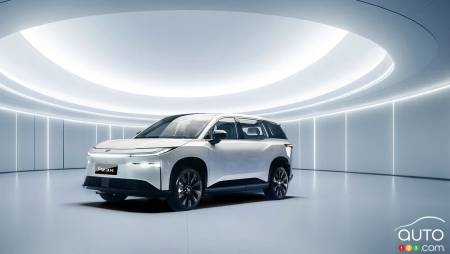



As it has seemingly always been, the Chinese market is a tough nut to crack. Toyota thinks it has a way in, and it runs through hybrid-vehicle technology. Just not the kind you might be thinking of.
The Japanese auto giant, while it maintains a well-earned reputation for caution when it comes to all-electric powertrains, is reportedly developing its first extended-range electric vehicle (EREV).
According to Japanese news outlet Nikkei, production of the first Toyota EREV is slated to begin in China as early as April 2027. Toyota aims to build roughly 200,000 units in its first year, scaling up to 400,000 units or thereabouts by 2028.
What’s an EREV, you ask?
Whie both systems feature an internal combustion engine (ICE), an EREV differs fundamentally from a conventional plug-in hybrid (PHEV). While a PHEV relies on its ICE for mechanical drive at higher speeds or full power, an EREV uses exclusively electric motors to turn the wheels. A small, on-board gasoline engine operates solely as a generator to recharge the battery once its juice runs low, delivering the smooth driving dynamics and instant torque of a pure EV without range anxiety.
It also stands apart from Nissan’s e-Power technology, in that it can be plugged in to recharge the battery.
Electrification diversification
The move towards EREVs creates Toyota’s fifth electrified powertrain branch, joining conventional hybrids, plug-in hybrids, battery-electrics and, lest we forget, fuel-cell vehicles. However, the initial target market is strictly China, the world’s largest and most fiercely competitive EV arena.
By introducing an EREV, Toyota seeks to navigate around the brutal price wars currently consuming China’s pure-electric segment, a segment in which domestic titans like BYD dominate with their low-cost BEV offerings. Because EREVs feature sophisticated dual-powertrain engineering, automakers can command higher price points while delivering a product that solves long-distance travel concerns.
A Toyota executive noted that the company must take deliberate steps to avoid being dragged into the hyper-competitive price war fixated on pure battery-electrics.
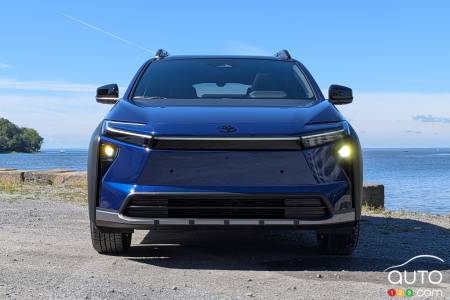
While specific model details remain under wraps, analysts speculate Toyota’s initial EREV will likely be a larger vehicle, such as a crossover or SUV, where a pure battery setup might otherwise prove too heavy or expensive.
A crowded bandwagon
Toyota joins a growing list of global manufacturers embracing extended-range technology, among them Ford, Hyundai and Stellantis. The caveat is that in many cases their future EREVs are earmarked for other markets than our own. But that can change, especially if EREVs succeed in those other markets.