





Volkswagen AG’s supervisory board has approved a plan to eliminate an additional 50,000 jobs. The decision doubles a previous reduction target set in 2024, bringing the total number of planned job eliminations to 100,000 by 2030. That represents roughly 15 per cent of the group’s global workforce of more than 650,000 employees.
The board’s approval of the new cuts follows intense negotiations between company executives, shareholders, state representative, and union leaders on the supervisory board.
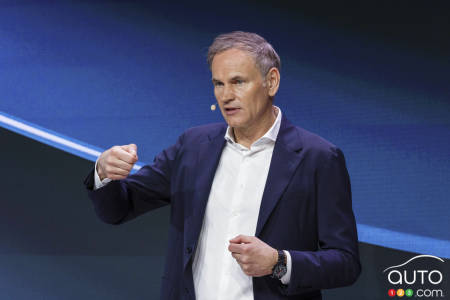
Chief Executive Oliver Blume, who faced significant pushback and was booed by workers at headquarters in Wolfsburg last month, now holds a mandate for what the automaker terms the most strategically profound transformation programme in its history. Beyond the workforce reductions, Volkswagen plans to halve its product lineup across its portfolio of iconic brands, which includes Audi, Porsche, Bentley, Skoda, Seat, Cupra and Lamborghini.
Speculation emerged late in the week that the Seat brand in particular may be on the chopping block.
Job cuts, but no immediate plant closings
Europe’s largest automaker is struggling under a convergence of severe market pressures, including aggressive competition from Chinese rivals, sluggish demand, a slower-than-expected transition to electric vehicles, and heavy U.S. tariffs. The supervisory board formally acknowledged an overcapacity in Europe equivalent to 500,000 vehicles for which there is no market.
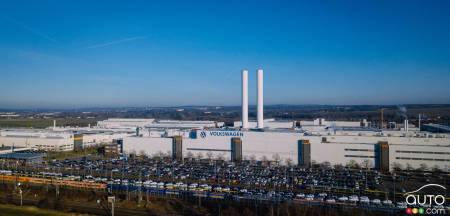
Central to the compromise reached with staff union IG Metall was avoiding immediate plant closures. In exchange for the staff reductions, four threatened German assembly plants, including Emden, Zwickau, Hanover and Audi’s Neckarsulm facility, received a stay of execution. Current production at these sites will end in a staggered phase-out between 2031 and 2034, while the automaker explores alternative uses for the facilities.
“In view of growing global competitive pressure, changing demand structures and technological change in the automotive industry, a systematic alignment of personnel capacities with economic reality is indispensable.”
- Volkswagen statement
Union leadership, including IG Metall chair Christiane Benner and General Works Council chair Daniela Cavallo, noted that concessions were made on both sides to avert a dangerous escalation. Analysts at Deutsche Bank called the unanimous approval a “fundamental breakthrough” demonstrating that Volkswagen's complex governance structure can address its structural challenges.