





In an effort to reduce development times and increase vehicle quality, Volkswagen today opened a cold and climate testing facility at its Wolfsburg
plant. The 5400 square meter centre was officially opened by Dr. Wolfgang Bernhard, Chairman of the VW brand. Some 150 other invited guests were present for the event.
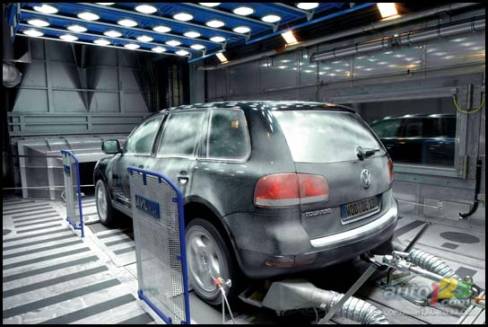
The 30 million Euro investment was designed to comprehensively test various components at a wide variety of conditions from -40 celsius to +150. Even extreme environmental threats like direct solar radiation, high humidity, elevations and wind blasts can be simulated.
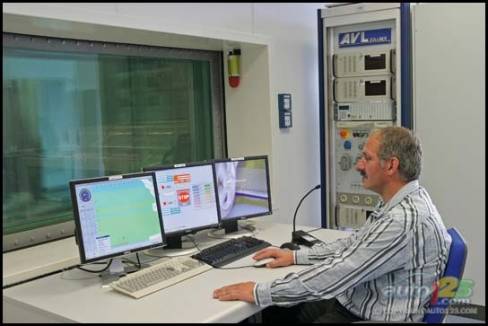
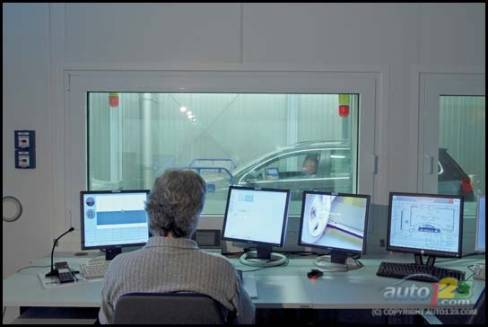
The German carmaker says that all of its vehicles undergo laboratory testing as a key part of technical development. The new facility boasts seven test chambers with highly advanced test equipment including roller systems and an engine test bed.
There are even smaller test cabinets ranging in size from 0.5 to 24 cubic meters for specific components like fuel injectors, switches, or doors.
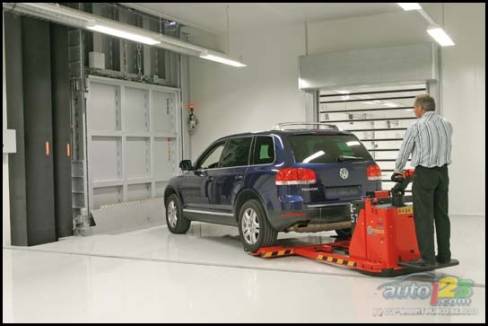
The use of upstream conditioning boxes brings vehicles to the appropriate
temperature before they enter the test chamber, which significantly increases the capacity of the centre. Dr. Jens Pohlmann, who runs the Cold and Climate Test Center, explains: "This approach has significantly increased the capacity of the center. We can now carry out about 50 different tests per day in two-shift operation."
The carmaker says that cost savings and time savings will result from the investment, with a higher quality vehicle as the result.
Sounds pretty cool to us.
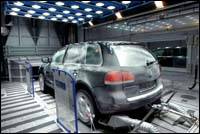 |
| (Photo: Volkswagen) |
The 30 million Euro investment was designed to comprehensively test various components at a wide variety of conditions from -40 celsius to +150. Even extreme environmental threats like direct solar radiation, high humidity, elevations and wind blasts can be simulated.
The German carmaker says that all of its vehicles undergo laboratory testing as a key part of technical development. The new facility boasts seven test chambers with highly advanced test equipment including roller systems and an engine test bed.
There are even smaller test cabinets ranging in size from 0.5 to 24 cubic meters for specific components like fuel injectors, switches, or doors.
The use of upstream conditioning boxes brings vehicles to the appropriate
 |
| (Photo: Volkswagen) |
The carmaker says that cost savings and time savings will result from the investment, with a higher quality vehicle as the result.
Sounds pretty cool to us.
Article Gallery