




• Auto123 gets in a first drive of the 2027 Toyota Tundra.
Frisco, Texas - Toyota decided the time was right to refresh its two closely related full-size vehicles for 2027.
The Tundra, the brand's stalwart representative in the full-size pickup segment, and the Sequoia, its large family SUV, both benefit from significant upgrades in design, technology, off-road capability and towing.
But while the two models share a closely related technical and technological philosophy, they cater to different needs. The Tundra is aimed primarily at those who require a work tool capable of heavy towing and hauling gear.
See also: 2027 Toyota Sequoia First Drive

A bit of history: the Toyota Tundra
Since launching the pickup in 1999, Toyota has sold more than 220,000 Tundras in Canada. The third generation was introduced in 2022, built on a new platform and equipped exclusively with twin-turbo V6 engines.
2027 Toyota Tundra – What’s new?
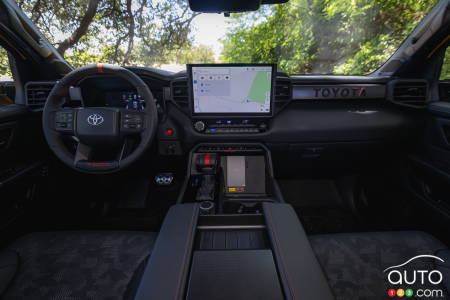
The truck receives a fairly substantial update. Toyota has revised the front-end styling, modernized certain cabin elements and installed its latest-generation multimedia system with a standard 14-inch touchscreen. A 12.3-inch digital instrument cluster is also standard across the board.
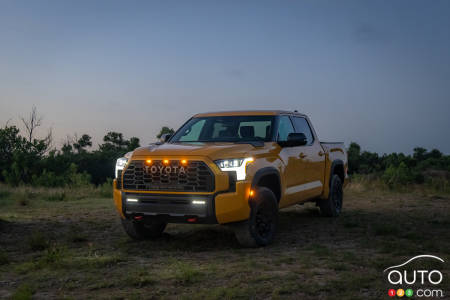
The big news is the arrival of the Trailhunter package, a variant designed for overlanding and off-road enthusiasts. It joins the TRD Pro trims, which gain upgraded FOX QS3 shock absorbers, red recovery hooks and a new exterior colour called Honeycomb.
Toyota has also pushed its towing technologies further. Automatic trailer detection, blind-spot monitoring tailored to trailer length and dynamic guidelines with steering assist all make manoeuvring easier.
In short, Toyota has realized that being able to pull a heavy load isn't enough: you also need to be able to back it up without creating a public spectacle in the parking lot.
Design of the 2027 Toyota Tundra – 8.0/10
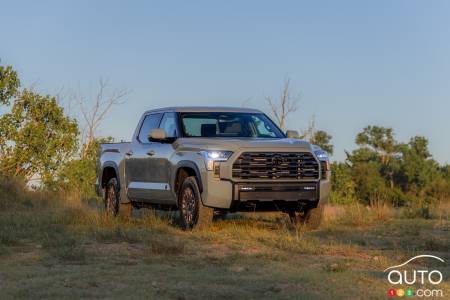
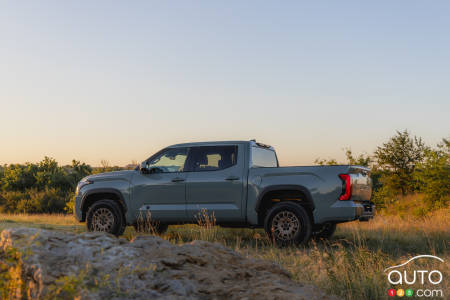
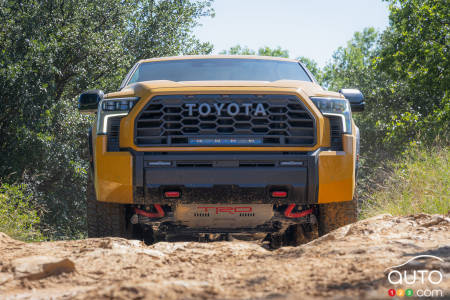
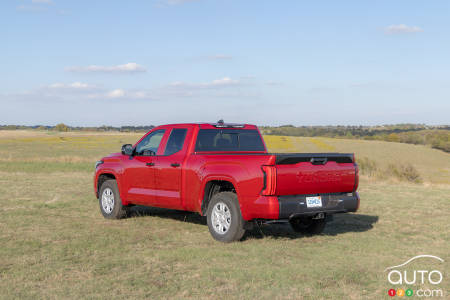
Because yes, the 2027 Tundra retains its imposing proportions. Also its massive grille and boxy silhouette, though Toyota has reworked the front end to give it a more modern, planted stance. The lower bumper has been redesigned to reinforce the impression of toughness.
The result remains distinctly North American in its approach: plenty of road presence, muscular surfacing and a stature that leaves little doubt about the vehicle's ambitions.
The Trailhunter trim stands out with bronze wheels, specific badging and a more adventure-oriented presentation. The Tundra Trailhunter rides on 18-inch wheels wrapped in 33-inch all-terrain tires. The TRD Pro opts for a more aggressive look with its red tow hooks and new Honeycomb paint finish.
Interior of the 2027 Toyota Tundra – 8.0/10
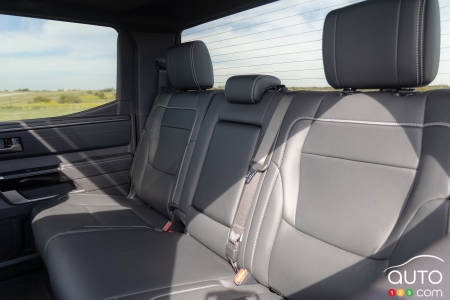
The Tundra has always sought to balance the demands of a work truck with those of a luxury vehicle. That duality carries over into the 2027 lineup. Entry-level trims remain fairly utilitarian, whereas the Platinum, 1794 and Capstone offer a markedly more refined environment. Premium leather, heated and ventilated seats, massaging seats, wood trim and ambient lighting are all available depending on the trim.
Technology of the 2027 Toyota Tundra – 9.0/10
The technology update is one of the shared highlights of both the Tundra and its port utility sibling. The 14-inch touchscreen becomes standard equipment, paired with a 12.3-inch digital gauge cluster. The multimedia system features a configurable home screen and permanently accessible shortcuts.
Another welcome addition is a built-in drive recorder that uses the exterior cameras to save 20-second video clips, which can be viewed directly on the central display. An upgraded digital key also allows owners to manage vehicle access using a compatible smartphone.
The new Arene software platform, developed by Woven by Toyota, is designed to let safety, voice recognition and connectivity features evolve over time through over-the-air updates.
Like the Sequoia, the Tundra also receives Toyota Safety Sense 4.0. This suite includes pre-collision braking with pedestrian detection, adaptive cruise control, lane-keeping assist, road sign recognition and proactive driving assist.
For towing, Toyota offers an especially comprehensive suite of features. Automatic trailer detection, trailer-adapted blind-spot monitoring and lane-keeping assist while towing are all included. The dynamic guidance system also simplifies reversing manoeuvres and helps prevent jackknifing.

Powertrain of the 2027 Toyota Tundra – 8.0/10
In this department, the Tundra offers more choice than the Sequoia. The gasoline-powered i-FORCE twin-turbo V6 produces 358 hp in the SR trim and up to 389 hp in several other variants. Buyers wanting more muscle can step up to the i-FORCE MAX hybrid, which delivers 437 hp and 583 lb-ft of torque. A TRD Pro variant equipped with the Performance Package pushes output to 469 hp thanks to specific upgrades.
When it comes to towing, the Tundra boasts a maximum advertised capacity of 5,080 kg (11,200 lb). By comparison, the Sequoia is rated at 4,137 kg (9,121 lb). Exact figures naturally vary depending on configuration, payload and installed equipment.

Driving the 2027 Toyota Tundra – 8.0/10
Mechanically, the Tundra and Sequoia share their underlying architecture, yet their day-to-day missions differ. The Tundra remains a full-size pickup built to handle payloads, trailers and demanding jobs. Its suspension and various configurations enable it to meet those demands, while upper trims layer on a healthy dose of comfort.
It’s worth noting that Toyota has recalibrated the drive programming to deliver a livelier Sport mode without sacrificing ride comfort. We put it to the test on rural Texas backroads with convincing results.
Toyota has also upgraded the Tundra's adaptive variable suspension. It is now standard on the Capstone and can be paired with a load-levelling air suspension on select Platinum and 1794 i-FORCE MAX trims. This setup helps keep the truck level under heavy loads while preserving ride quality.
The off-road trims deserve special mention. The new Trailhunter package brings serious factory-engineered hardware, including Old Man Emu shock absorbers, underbody skid plates and a locking rear differential. The TRD Pro goes even further with adjustable FOX QS3 shocks. This equipment doesn't turn the Tundra into a lightweight rock crawler, but it considerably expands its playground.
Fuel consumption
The Tundra and Sequoia are large four-wheel-drive vehicles powered by a twin-turbo V6 and engineered to haul or tow heavy loads. While the hybrid powertrain improves fuel efficiency compared to a conventional engine of similar output, it doesn't turn these giants into economy vehicles.
The gas-only i-FORCE Tundra posts ratings of roughly 13.6L/100 km in the city, 10.6L/100 km on the highway and 12.3L/100 km combined. For the Tundra hybrid, figures published by Toyota Canada for 2026 stood at 12.7L/100 km city, 11.5L/100 km highway and 11.7L/100 km combined. Final 2027 ratings for the hybrid remain to be confirmed.
2027 Toyota Tundra – Canadian pricing and trims
The 2027 Tundra lineup is particularly broad in Canada, with Toyota offering multiple cab, bed and powertrain configurations. The gas-powered SR opens at $61,340, while the SR5 Trailhunter sits at $72,675. Upper trims like the Platinum, 1794 and Capstone push the price higher, as do the TRD Pro hybrid models.
Base MSRPs for the 2027 Tundra, as per Toyota Canada
- • Tundra SR Gas - $61,340
- • Tundra SR5 Gas - $67,850
- • Tundra Trailhunter - $72,675
- • Tundra Limited Hybrid - $80,000
- • Tundra Platinum Hybrid - $89,050
- • Tundra TRD Pro Hybrid - $94,553
- • Tundra Capstone Hybrid - $97,730
Base prices in Canadian dollars, before freight, PDI, taxes and applicable fees.