





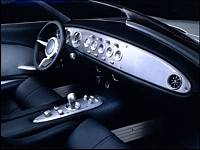
During the production announcement Callum added, "F-Type represents one of the greatest design challenges in Jaguar history. It must capture the spirit, sensuousness and passion of the original concept, reflect Jaguar's future direction and meet real world packaging and performance requirements. The challenge is to create a true 21st century successor to the E-type, the icon of the 60s."
Jaguar's two young interior designers, Adam Hatton and Pasi Pennanen, did just that paying homage to the lightweight aluminum E-Type racers of the early 60s, a fitting tribute. The purposeful design focuses on driver empowerment over passenger comfort. Not that it's a rude environment, on the contrary really. Comfortable leather clad buckets appear to offer tremendous lateral support while stylish and lightweight aluminum trim pieces highlight its solid alloy switchgear.
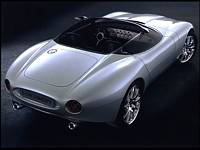 |
| The F-Type pulls design cues from Jaguar's rich heritage, but still has an element of modernity. (Photo: Jaguar) |
The rightmost aluminum foot pedal prods a hardly modified 240-hp 3.0-L AJ-V6, the same as that in the new top-line X-Type and base S-Type sedans, while a 300-hp supercharged version would have been made optional. While customers would have mostly likely opted for the manual shifter more often than not, a 5-speed automatic was to be offered, all driving the rear wheels in typical Jag fashion. I should be careful how I word that as the British marque now offers all-wheel drive on its smallest sedan entry, which could have been a "production-feasible option" according to the Jaguar press release of the time.