





Other owner praise-points tend to be given to the heated seats, rear cargo area and practical, functional interior layout.
Numerous complaints centre around a well documented ‘pressure problem’ that occurs when the rear windows are opened during driving. Apparently, doing so causes a pulsating pressure ‘wave’ to be transmitted through the cabin, possibly causing discomfort or annoyance. This phenomenon is called wind-buffeting, and can be combated by partially opening more than one window.
Other gripes include uncomfortable front seats, a few ergonomic issues, limited rear-seat legroom for taller occupants, improperly-placed cup-holders and sub-par performance from the upgraded stereo. A few owners report a vague and mushy feel from the brakes, and a few others wished that all of the controls would light up at night, too.
Before test driving, check the level and condition of the engine oil, especially on V6 models. Do this when the engine is cold for an accurate reading. Several owners have reported oil consumption problems, and if the oil on the unit you’re considering looks low or burnt, it could mean trouble. If the vehicles former owner wasn’t a fan of checking and maintaining oil levels, accelerated engine wear is likely.
Note that all engines consume ‘some’ oil, but that excessive consumption is an issue. If the oil level and condition looks good, ask the seller if they’ve had to add oil frequently.
While driving, ensure all interior equipment works as expected—including the automatic climate control, CD-changer and air conditioning, as equipped. Check for proper operation of all windows, motorized seats and the rear-seat heating system, too.
Shoppers should also scrutinize the interior for signs of excessive wear. Some Highlander owners report wear of leather seating surfaces, upholstery and trim plastics earlier than expected.
Worrisome problems with specific hardware or systems on the first-generation Highlander proved challenging to nail down. Research in various online forums found a few mentions of stuck brake calipers, engine failure and strange noises from under the hood-- but these were small in number and appeared far from systematic.
Successfully finding a good used Highlander model will largely depend on driver instincts during the test drive. Listen to and ‘feel’ everything the vehicle does. Clunks, grinding sounds or unpleasant sensations while steering, braking, accelerating or shifting should be investigated. The engine, transmission and suspension should work smoothly, quietly and un-abruptly.
Also, be absolutely certain to inspect tires and brakes, as this may prevent the seller from passing an expensive maintenance job on to you. If in doubt, your favourite mechanic would love to have a look at the Highlander you’re considering, just to be safe.
Choose as new a model as your budget will allow, opting for a certified used Toyota model if possible for extra peace of mind.
You’ll pay a premium for a used Toyota Highlander compared to some models, though they appear to be solid, relatively worry-free and mainly enjoyed by their owners.
photo:Toyota
Numerous complaints centre around a well documented ‘pressure problem’ that occurs when the rear windows are opened during driving. Apparently, doing so causes a pulsating pressure ‘wave’ to be transmitted through the cabin, possibly causing discomfort or annoyance. This phenomenon is called wind-buffeting, and can be combated by partially opening more than one window.
Other gripes include uncomfortable front seats, a few ergonomic issues, limited rear-seat legroom for taller occupants, improperly-placed cup-holders and sub-par performance from the upgraded stereo. A few owners report a vague and mushy feel from the brakes, and a few others wished that all of the controls would light up at night, too.
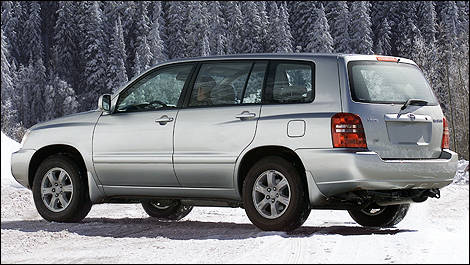 |
| 2001 Toyota Highlander |
Before test driving, check the level and condition of the engine oil, especially on V6 models. Do this when the engine is cold for an accurate reading. Several owners have reported oil consumption problems, and if the oil on the unit you’re considering looks low or burnt, it could mean trouble. If the vehicles former owner wasn’t a fan of checking and maintaining oil levels, accelerated engine wear is likely.
Note that all engines consume ‘some’ oil, but that excessive consumption is an issue. If the oil level and condition looks good, ask the seller if they’ve had to add oil frequently.
While driving, ensure all interior equipment works as expected—including the automatic climate control, CD-changer and air conditioning, as equipped. Check for proper operation of all windows, motorized seats and the rear-seat heating system, too.
Shoppers should also scrutinize the interior for signs of excessive wear. Some Highlander owners report wear of leather seating surfaces, upholstery and trim plastics earlier than expected.
Worrisome problems with specific hardware or systems on the first-generation Highlander proved challenging to nail down. Research in various online forums found a few mentions of stuck brake calipers, engine failure and strange noises from under the hood-- but these were small in number and appeared far from systematic.
Successfully finding a good used Highlander model will largely depend on driver instincts during the test drive. Listen to and ‘feel’ everything the vehicle does. Clunks, grinding sounds or unpleasant sensations while steering, braking, accelerating or shifting should be investigated. The engine, transmission and suspension should work smoothly, quietly and un-abruptly.
Also, be absolutely certain to inspect tires and brakes, as this may prevent the seller from passing an expensive maintenance job on to you. If in doubt, your favourite mechanic would love to have a look at the Highlander you’re considering, just to be safe.
Choose as new a model as your budget will allow, opting for a certified used Toyota model if possible for extra peace of mind.
You’ll pay a premium for a used Toyota Highlander compared to some models, though they appear to be solid, relatively worry-free and mainly enjoyed by their owners.
photo:Toyota


Article Gallery