





A major step toward establishing hydrogen as the fuel of the future occurred five months after first introducing the world to Hy-Wire. GM announced in April they would be joining with BMW to develop refueling devices for liquid hydrogen stations. The collaborative work will center on setting global standards, establishing specifications for suppliers and finding the best technical and most cost effective solution, according to Christoph Huss, BMW's head of Science and Traffic Policy.
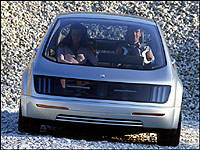 |
| Learning from Toyota's mistakes in the FCV market, GM is taking its time before releasing the Hy-Wire to the public. (Photo: General Motors) |
GM may not be the first to introduce a running fuel cell vehicle (FCV), but they wish to be the best in the long run. They are avoiding the pitfalls Toyota is experiencing (they recently chose to pull their 10 test FCVs off the roads of California) by rushing to market, while learning from the mistakes of others.
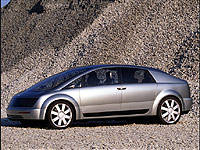 |
| "We want to be the first carmaker to sell one million fuel cell vehicles," stated GM technology chief Larry Burns. (Photo: General Motors) |
GM will ultimately bring a fuel cell vehicle to market, Burns promises. "We want to be the first carmaker to sell one million fuel cell vehicles." GM is betting that if it cannot only match the cost and functionality of a conventional car, but add some unique features, it could dominate the future market for FCVs.
The thought of global domination brings me to think about power. One of the most important features of any vehicle, especially for making it marketable in a performance oriented society, is its ability to accelerate. Certainly, when it comes to off-the-line acceleration, fuel cell technology has a long way to go before it is truly competitive with the internal-combustion engine, but GM's latest-generation stack is starting to get close with a power density of 1.75 kilowatts per liter the highest specific output announced by any fuel cell developer to date.