





Complaints include interior squeaks and rattles, some low-budget interior trim pieces, the lack of lighting on certain controls at night, and premature brake wear-- though the latter is largely subject to the individual driving style and locale at play.
Noteworthy is a mixed sentiment between two comfort-related aspects of the last-generation Sonata: the seats and the ride quality. Some owners rave about comfort levels related to both, while others complain of stiff, uncomfortable seats and a noisy and harsh ride. Take a lengthy test drive to ensure you feel comfortable in the used Sonata you’re considering.
Here’s a bit of a surprise to some: the last-generation Sonata looks to be very reliable. In this writer’s standard checks of numerous online forums and websites, no major, systematic or worrisome issues were found to be reported by large numbers of owners. Drivelines and major systems all look to be solid and dependable.
One online owner comments “I used to own a Japanese made car as well as a German made car before. I thought the Japanese cars were maintenance-effective compared to German car, but I got to admit that Hyundai beat the Japanese car I had. Good car to own and operate!”
Regardless, the Sonata is a machine made of components that will eventually wear out and break. As such, a check over for tire wear, brake system condition, clutch wear (if applicable) and the condition of the vehicle’s suspension is advised. Be sure the former owner was fond of changing their Sonata’s oil on time, and budget for a full fluid change and tune-up if you’re unsure of the vehicles history.
Additionally, test-drivers will want to inspect the body for rust, check the cabin for loose, broken or missing panels or switches, and ensure that all door locks and windows operate as expected. If the Sonata you’re considering has a CD-changer or power seats, ensure these expensive-to-fix parts are in proper working order, too.
While driving, listen and ‘feel’ for unwelcomed noises and sensations with the stereo switched off. Popping or clunking noises from the suspension likely indicate a worn-out component, and a pulsation during moderate braking likely means that a brake-job is on the horizon. If the vehicle ‘pulls’ to one side or the other when the steering wheel is released on a flat road, it may need an alignment, too.
Ultimately, if you’re able to find a good deal on a last-generation Sonata that’s healthy and well-maintained, you’ll likely wind up with a reliable and enjoyable car. Best of all, you’ll save a few bucks, too.
Noteworthy is a mixed sentiment between two comfort-related aspects of the last-generation Sonata: the seats and the ride quality. Some owners rave about comfort levels related to both, while others complain of stiff, uncomfortable seats and a noisy and harsh ride. Take a lengthy test drive to ensure you feel comfortable in the used Sonata you’re considering.
Here’s a bit of a surprise to some: the last-generation Sonata looks to be very reliable. In this writer’s standard checks of numerous online forums and websites, no major, systematic or worrisome issues were found to be reported by large numbers of owners. Drivelines and major systems all look to be solid and dependable.
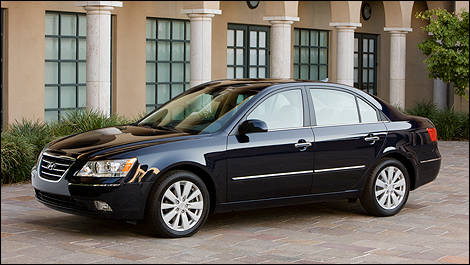 |
| 2010 Hyundai Sonata. (Photo: Hyundai) |
One online owner comments “I used to own a Japanese made car as well as a German made car before. I thought the Japanese cars were maintenance-effective compared to German car, but I got to admit that Hyundai beat the Japanese car I had. Good car to own and operate!”
Regardless, the Sonata is a machine made of components that will eventually wear out and break. As such, a check over for tire wear, brake system condition, clutch wear (if applicable) and the condition of the vehicle’s suspension is advised. Be sure the former owner was fond of changing their Sonata’s oil on time, and budget for a full fluid change and tune-up if you’re unsure of the vehicles history.
Additionally, test-drivers will want to inspect the body for rust, check the cabin for loose, broken or missing panels or switches, and ensure that all door locks and windows operate as expected. If the Sonata you’re considering has a CD-changer or power seats, ensure these expensive-to-fix parts are in proper working order, too.
While driving, listen and ‘feel’ for unwelcomed noises and sensations with the stereo switched off. Popping or clunking noises from the suspension likely indicate a worn-out component, and a pulsation during moderate braking likely means that a brake-job is on the horizon. If the vehicle ‘pulls’ to one side or the other when the steering wheel is released on a flat road, it may need an alignment, too.
Ultimately, if you’re able to find a good deal on a last-generation Sonata that’s healthy and well-maintained, you’ll likely wind up with a reliable and enjoyable car. Best of all, you’ll save a few bucks, too.

Article Gallery