





That said, on a test drive, be sure to do a few standard checks when it comes to turbo engines. Inspect the tailpipe with the engine running, looking for any signs of blue or white smoke that could indicate a problem with the turbocharger or cylinder head.
If possible, remove the plumbing that connects the turbocharger to the intercooler and inspect for oil buildup. A thin film of oil is typically normal, though any pooling or heavy buildup of engine oil could indicate worn out turbo seals. These checks are a little time consuming, but could prevent a shopper from purchasing a car that’s in need of an expensive turbo replacement.
If performance seems ‘weak’ or inconsistent, a blocked PCV valve or worn out diverter valve could be to blame. These issues are relatively minor and easy to fix, though your potential used GTI candidate should be inspected by a VW-trained mechanic if you’re not confident in how it’s running.
If you opt for a model with the DSG gearbox, ensure that shifts are smooth and nearly imperceptible once the car is rolling. Note that a slight delay between throttle application and forward motion from a stop is normal, but that harsh shifting or ‘surging’ are not. Numerous owners have had to reprogram or replace the computer that controls this advanced gearbox, too. The DSG is a hoot to use, but if in doubt, just opt for the six-speed stick.
Standard checks also apply to consumables like brakes and tires. Squeaky brakes likely need to be changed, and worn out tires need to be replaced. Call the condition of any excessively worn-out tires or brakes into pricing negotiations.
Numerous Volkswagen models (and many German cars in general) are known for frustrating electrical issues. As such, on a test-drive, ensure that all electronics and interior accessories work as expected. Be sure your used GTI doesn’t have a burned-out xenon light either, as these can be pricey to replace.
Also, to increase your chances of owning a reliable vehicle for years to come, avoid a used GTI model with heavy aftermarket upgrades. Intake and exhaust modifications will be common on GTI models in the used market-- though the average owner should avoid models with more serious upgrades to turbochargers, engine management or nitrous. Though these add-ons can provide plenty of enjoyment, they can also turn your engine inside out with no notice if not installed or set up properly. For a more worry-free experience, stick to as stock a model as you can find.
The same sort of shopper discretion applies to suspension and body modifications.
End of the day, a used last-generation VW GTI with few or no modifications and a thumbs up from a mechanic should prove to be an exciting and dependable ride for years to come.
photo:Volkswagen
If possible, remove the plumbing that connects the turbocharger to the intercooler and inspect for oil buildup. A thin film of oil is typically normal, though any pooling or heavy buildup of engine oil could indicate worn out turbo seals. These checks are a little time consuming, but could prevent a shopper from purchasing a car that’s in need of an expensive turbo replacement.
If performance seems ‘weak’ or inconsistent, a blocked PCV valve or worn out diverter valve could be to blame. These issues are relatively minor and easy to fix, though your potential used GTI candidate should be inspected by a VW-trained mechanic if you’re not confident in how it’s running.
If you opt for a model with the DSG gearbox, ensure that shifts are smooth and nearly imperceptible once the car is rolling. Note that a slight delay between throttle application and forward motion from a stop is normal, but that harsh shifting or ‘surging’ are not. Numerous owners have had to reprogram or replace the computer that controls this advanced gearbox, too. The DSG is a hoot to use, but if in doubt, just opt for the six-speed stick.
 |
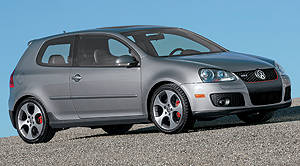
| 2009 Volkswagen GTI |
Standard checks also apply to consumables like brakes and tires. Squeaky brakes likely need to be changed, and worn out tires need to be replaced. Call the condition of any excessively worn-out tires or brakes into pricing negotiations.
Numerous Volkswagen models (and many German cars in general) are known for frustrating electrical issues. As such, on a test-drive, ensure that all electronics and interior accessories work as expected. Be sure your used GTI doesn’t have a burned-out xenon light either, as these can be pricey to replace.
Also, to increase your chances of owning a reliable vehicle for years to come, avoid a used GTI model with heavy aftermarket upgrades. Intake and exhaust modifications will be common on GTI models in the used market-- though the average owner should avoid models with more serious upgrades to turbochargers, engine management or nitrous. Though these add-ons can provide plenty of enjoyment, they can also turn your engine inside out with no notice if not installed or set up properly. For a more worry-free experience, stick to as stock a model as you can find.
The same sort of shopper discretion applies to suspension and body modifications.
End of the day, a used last-generation VW GTI with few or no modifications and a thumbs up from a mechanic should prove to be an exciting and dependable ride for years to come.
photo:Volkswagen


Article Gallery