





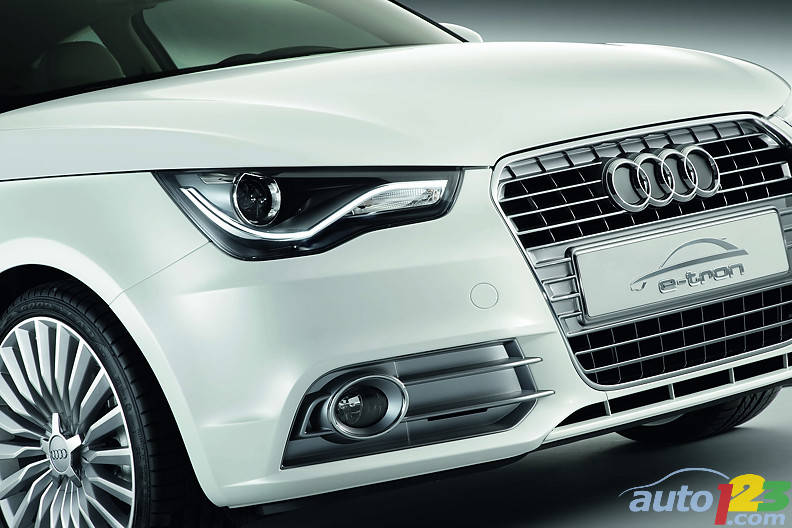
The power electronics are mounted in the engine compartment above the electric motor. The most important components are the pulse-controlled inverter, which serves as the controller between the electric motor and the battery; the DC converter, which connects the high-voltage network with the 14 volt electrical system; a breaker unit to protect the high-voltage components; and the charging module. The socket for the standard charging plug is located behind the rings in the single-frame grille of the Audi A1 e-tron. A fully depleted battery can be recharged in approximately three hours from the 380 volt grid. A display immediately adjacent to the plug-in connection shows the current charge status and the charging time remaining.
The battery pack: a compact T arranged below the floor
The energy storage unit is arranged below the floor, where it is ideal for the center of gravity and weight distribution. The battery pack is shaped like a T, with the short “transverse beam” filling the rear section of the center tunnel and the “cross-beam” filling that area in front of the rear axle where the fuel tank is otherwise located. The 380 volt lithium-ion rechargeable battery has a nominal energy content of 12 kilowatt hours. It comprises 96 prismatic cells and weighs less than 150 kilograms (330.69 lb).
The range extender
The A1 e-tron concept car has a Wankel engine as a range extender, but other compact concepts are also possible. The small single-rotor Wankel has a chamber volume of 254 cc and runs at a constant 5,000 rpm in its peak efficiency window. The electronics also consider navigation data such as the destination and route profile to automatically activate the range extender as needed. The driver can also turn the range extender on and off as necessary with the push of a button The fuel tank holds 12 liters (3.17 US gallons).
Driving experience
The first defining impression that the driver of the Audi A1 e-tron gets is that of nearly total silence. Even the Wankel engine in the back can barely be heard when it is running.
The second characteristic perception is the power of the electric motor, nearly all of which is available instantly and thrusts the Audi A1 e-tron forward with authority. The innovative Mega City Vehicle, which despite its complex drive technology weighs only 1,190 kilograms (2,623.50 lb) delivers zero-emission driving fun in a modern and sophisticated manner. The vehicle accelerates from 0 to 100 km/h (62.14 mph) in 10.2 seconds and has a top speed of more than 130 km/h (80.78 mph).
Design
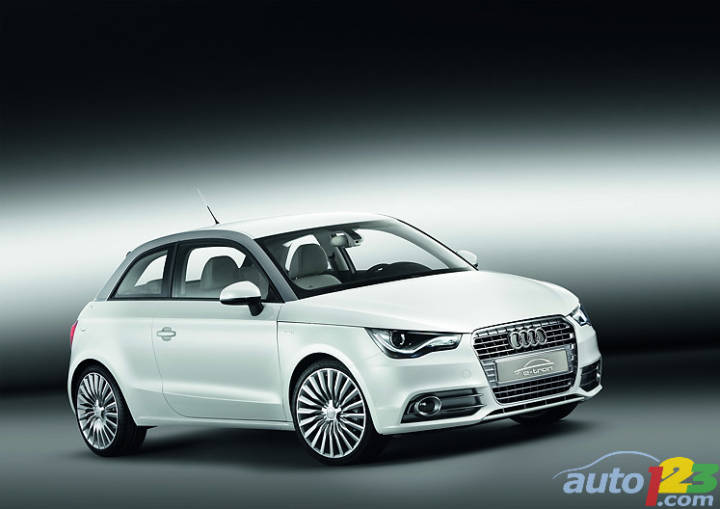
The concept car in Geneva has a special “Aqua Mint, pearl effect” paint finish; the contrasting roof arch is offset in “High Gloss Steel dark.” As with the other two e-tron models, the 18-inch wheels with a 20-spoke turbine design convey the high-tech aspiration of the concept.
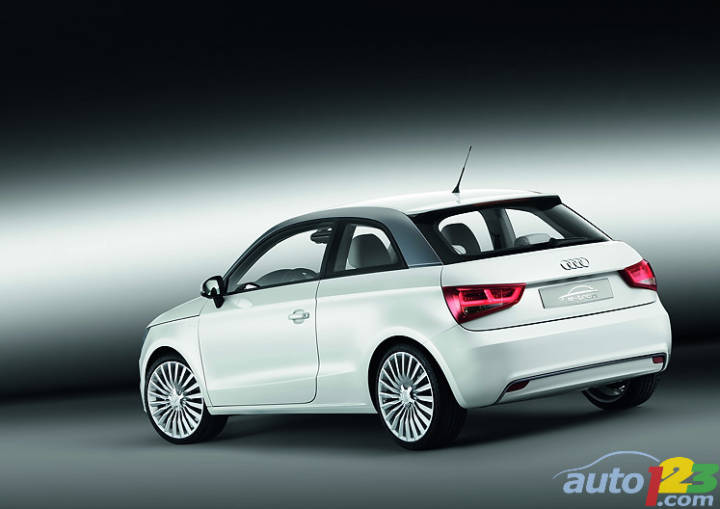
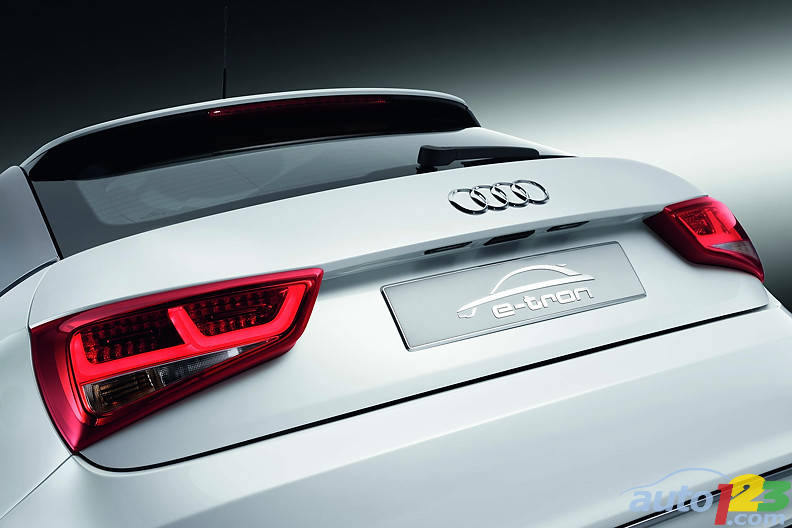
The rear diffuser with aluminum trim lacks tailpipes. This emphasizes the width of the vehicle and suggests the low emissions. The two front fenders are emblazoned with the “e-tron” logo.
photo:Audi
 |
| (Photo: Audi) |
The battery pack: a compact T arranged below the floor
The energy storage unit is arranged below the floor, where it is ideal for the center of gravity and weight distribution. The battery pack is shaped like a T, with the short “transverse beam” filling the rear section of the center tunnel and the “cross-beam” filling that area in front of the rear axle where the fuel tank is otherwise located. The 380 volt lithium-ion rechargeable battery has a nominal energy content of 12 kilowatt hours. It comprises 96 prismatic cells and weighs less than 150 kilograms (330.69 lb).
The range extender
The A1 e-tron concept car has a Wankel engine as a range extender, but other compact concepts are also possible. The small single-rotor Wankel has a chamber volume of 254 cc and runs at a constant 5,000 rpm in its peak efficiency window. The electronics also consider navigation data such as the destination and route profile to automatically activate the range extender as needed. The driver can also turn the range extender on and off as necessary with the push of a button The fuel tank holds 12 liters (3.17 US gallons).
Driving experience
The first defining impression that the driver of the Audi A1 e-tron gets is that of nearly total silence. Even the Wankel engine in the back can barely be heard when it is running.
The second characteristic perception is the power of the electric motor, nearly all of which is available instantly and thrusts the Audi A1 e-tron forward with authority. The innovative Mega City Vehicle, which despite its complex drive technology weighs only 1,190 kilograms (2,623.50 lb) delivers zero-emission driving fun in a modern and sophisticated manner. The vehicle accelerates from 0 to 100 km/h (62.14 mph) in 10.2 seconds and has a top speed of more than 130 km/h (80.78 mph).
Design
The concept car in Geneva has a special “Aqua Mint, pearl effect” paint finish; the contrasting roof arch is offset in “High Gloss Steel dark.” As with the other two e-tron models, the 18-inch wheels with a 20-spoke turbine design convey the high-tech aspiration of the concept.
The rear diffuser with aluminum trim lacks tailpipes. This emphasizes the width of the vehicle and suggests the low emissions. The two front fenders are emblazoned with the “e-tron” logo.
photo:Audi
Article Gallery