





In 2003, DaimlerChrysler launched an extensive series of practical tests for the fuel cell in cars, vans and regular service buses.
Today, more than 100 fuel cell vehicles are currently in everyday application, says Weber, ''providing DCX engineers with invaluable information for the ongoing development of this future-oriented technology. This involves optimization of the vehicles and their components, the establishment of an infrastructure, and the increased acceptance of hydrogen technology among drivers and passengers.''
Since 2003, 30 Mercedes-Benz Citaro city buses with fuel cell drive have been on the move in regular route service in 10 major European cities. Three buses are also in operation in Perth, Australia, and another three will operate in Peking, China.
''These vehicles must prove their worth in the most varied of climatic conditions,'' Weber points out, and they alone have already covered more than 500,000 km and transported more than two million passengers.
Several fuel cell-powered Sprinter Vans also are currently being used in day-to-day delivery operations with dispatching companies in the United States and Germany.
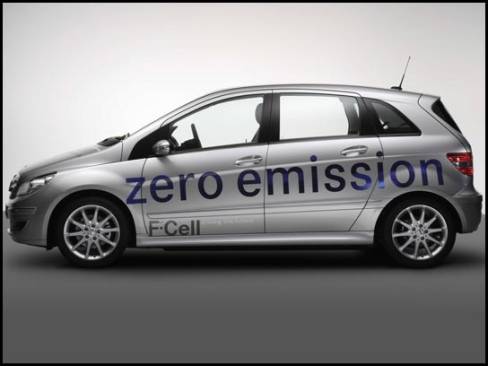
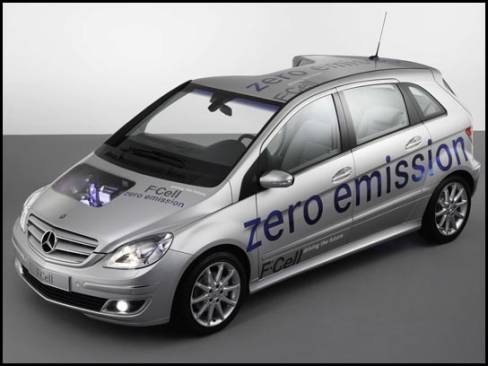
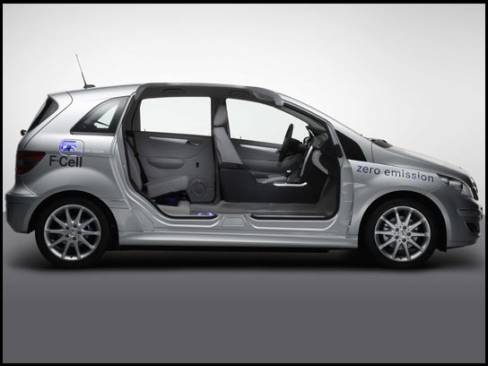
Since late 2004, says Weber, 60 Mercedes-Benz F-Cell's have been in operation with customers in the United States, Germany, Japan and Singapore. ''In this first test phase, approximately 300,000 km have already been covered under highly diverse conditions and documented with these vehicles.''
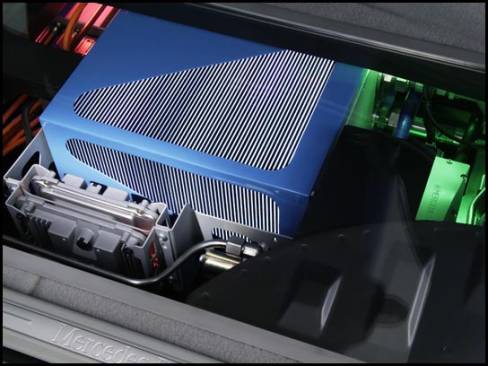
In the long term, Weber says, ''the fuel cell provides the best opportunities for securing uncompromisingly environment-friendly mobility for the automobile. The fuel cell runs on either pure hydrogen or hydrogen media, and is thus a genuine zero-emission power unit, since electrical energy is released in a chemical reaction between the hydrogen and atmospheric oxygen to drive an electric motor. Moreover, the fuel cell has an efficiency factor approximately twice that of the internal combustion engine.''
Weber says that, in order to focus expertise and resources and to press ahead with the development of the fuel cell, DaimlerChrysler has entered into a strategic alliance with Ford Motor Company and Ballard Power Systems of British Columbia.
''Partnerships are an important part of fuel cell technology development,'' says Weber. DaimlerChrysler has the opportunity of sharing goals with other companies and government entities, such as UPS and the U.S. Environmental Protection Agency.
DaimlerChrysler and BP, partners in the U.S. Department of Energy's fuel cell vehicle and infrastructure validation program, recently dedicated the first hydrogen station in the plan. ''These partnerships and the common goal will propel fuel cell transportation to maturity,'' Weber says.
Weber believes that the fuel cell is the key technology for emission-free driving of the future and is the long-term objective of DaimlerChrysler's five-stage Energy for the Future roadmap.
DaimlerChrysler is continuing to optimize the internal combustion engine, of course, ''since the potential of gasoline and diesel engines has by no means been exhausted. The aim is to reduce fuel consumption and exhaust emissions, while at the same time enhancing driving pleasure, power development and comfort.''
Weber says DaimlerChrysler is also committed to optimizing fuel quality worldwide and is supporting the fuel evolution from crude oil to largely CO2-neutral fuels derived from biomass. Hybrid drive is a significant interim solution along the road to emission-free mobility with the fuel cell.
They've certainly come a long way from not doing laps around the Brandenburg Gates.
photo:DaimlerChrysler AG
 |
| Mercedes-Benz B-Class F-Cell (photo: DaimlerChrysler AG) |
Since 2003, 30 Mercedes-Benz Citaro city buses with fuel cell drive have been on the move in regular route service in 10 major European cities. Three buses are also in operation in Perth, Australia, and another three will operate in Peking, China.
''These vehicles must prove their worth in the most varied of climatic conditions,'' Weber points out, and they alone have already covered more than 500,000 km and transported more than two million passengers.
Several fuel cell-powered Sprinter Vans also are currently being used in day-to-day delivery operations with dispatching companies in the United States and Germany.
Since late 2004, says Weber, 60 Mercedes-Benz F-Cell's have been in operation with customers in the United States, Germany, Japan and Singapore. ''In this first test phase, approximately 300,000 km have already been covered under highly diverse conditions and documented with these vehicles.''
 |
| Mercedes-Benz B-Class F-Cell (photo: DaimlerChrysler AG) |
Weber says that, in order to focus expertise and resources and to press ahead with the development of the fuel cell, DaimlerChrysler has entered into a strategic alliance with Ford Motor Company and Ballard Power Systems of British Columbia.
''Partnerships are an important part of fuel cell technology development,'' says Weber. DaimlerChrysler has the opportunity of sharing goals with other companies and government entities, such as UPS and the U.S. Environmental Protection Agency.
DaimlerChrysler and BP, partners in the U.S. Department of Energy's fuel cell vehicle and infrastructure validation program, recently dedicated the first hydrogen station in the plan. ''These partnerships and the common goal will propel fuel cell transportation to maturity,'' Weber says.
Weber believes that the fuel cell is the key technology for emission-free driving of the future and is the long-term objective of DaimlerChrysler's five-stage Energy for the Future roadmap.
DaimlerChrysler is continuing to optimize the internal combustion engine, of course, ''since the potential of gasoline and diesel engines has by no means been exhausted. The aim is to reduce fuel consumption and exhaust emissions, while at the same time enhancing driving pleasure, power development and comfort.''
Weber says DaimlerChrysler is also committed to optimizing fuel quality worldwide and is supporting the fuel evolution from crude oil to largely CO2-neutral fuels derived from biomass. Hybrid drive is a significant interim solution along the road to emission-free mobility with the fuel cell.
They've certainly come a long way from not doing laps around the Brandenburg Gates.
photo:DaimlerChrysler AG
Article Gallery