





Splitting the base and top engine choices is a 240-horsepower 3.9L V6 with 242 lb-ft of torque, based on the same architecture as the 3.5L V6.
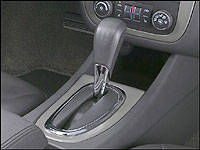 |
| GM combines all engines with its well-proven Hydra-Matic 4T65-E electronically controlled 4-speed automatic transmission. (Photo: General Motors of Canada) |
GM combines all engines with its well-proven Hydra-Matic 4T65-E electronically controlled 4-speed automatic transmission, for smooth shifts and durable performance. Just the same, most rivals offer either 5- or 6-speed automatics, which have the ability to offer greater performance from less powerful engines, and improvements in fuel economy.
Power without control would be utterly wasted, so therefore GM has upgraded the Impala's suspension system to allow what the automaker refers to as "more confident ride and handling characteristics."
Of course, the new model will ride quietly and smoothly too, paramount for any large, midsize car. It gets a heavier duty front-end structure, reducing noise vibration and harshness (NVH) levels and enhancing control through corners or during emergency evasive maneuvers.
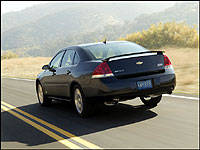 |
| GM has upgraded the car's suspension system to allow what the automaker refers to as "more confident ride and handling characteristics." (Photo: General Motors of Canada) |
The same can be said about the results of its fully boxed upper frame rail assemblies, with a wider, deeper and structurally stronger upper front tie bar. Also, the engineers have included stronger ties between the upper and lower rails to stiffen the front structure, improving both ride and handling, while the large, lower front-of-dash panel is now stronger. It is constructed from Quiet Steel laminated steel, made by bonding sound deadening material between sheets of steel to lower resonant sound "from a 'clanging' to a muted 'thud'", or so says GM's literature on the subject. The Impala gets a more rigid extruded aluminum engine cradle as well, making the car's ride smoother with less vibration.