





The announcement of 25-percent tariffs on auto imports into the U.S. is rippling across the industry. While major manufacturers like Hyundai, Volkswagen and General Motors are preparing to absorb a rise in costs, one player stands apart: Tesla.
Thanks to its production plants in California and Texas, Elon Musk's brand is largely protected from the new 25-percent tariffs announced by the Trump administration on imported vehicles and components.

A competitive advantage for Tesla
While Ford produces 80 percent of its vehicles in the U.S., Tesla is even better positioned. The CFRA Research firm found that Tesla is the manufacturer least exposed to the new tariffs, a position that the brand proudly trumpets, so to speak, on X, stating that it produces “the most American cars on the market.”
Things are pricklier for most other brands. Hyundai and Kia do have factories in Alabama and Georgia, respectively, but they still import more than a million vehicles each year into the U.S. The announced tariffs might add up to $7 billion to their costs.
Toyota, Subaru and Nissan also vulnerable
Even Toyota, well established in the U.S. with factories in several states, imports nearly half of the vehicles it sells on American soil. According to Goldman Sachs Japan, the tariffs, which are due to take effect on April 2nd, could reduce its operating profit by 6 percent by 2026.
Subaru is looking at ways it can mitigate the impact of the tariffs, but it could lose 23 percent of its profit.
The hardest hit Japanese brand, however, remains Nissan, which could see its profits plummet by 56 percent due to the tariffs, according to Goldman Sachs Japan.
American manufacturers affected
Nor are the big U.S. automakers spared either. General Motors imports some of its flagship models like the Chevrolet Equinox and Trax from South Korea and Mexico.
Stellantis manufactures its Jeep Compass and Wagoneer S in Mexico, and the Chrysler Pacifica in Canada.
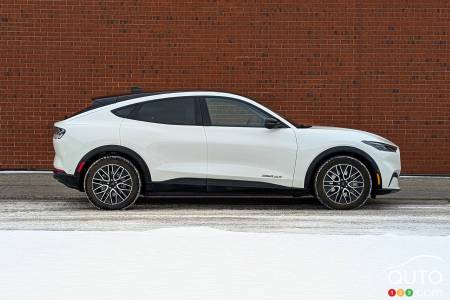
Ford, although largely based in the U.S., assembles strategic vehicles such as the Mustang Mach-E and the Bronco Sport in Mexico.
These manufacturers will have to find solutions to compensate for the increase in costs without impacting consumers too much.
Tesla not completely spared
Musk has pointed out that Tesla will not emerge completely unscathed from the trade war. He posted on X that the new taxes will have a significant impact on production costs.
According to the National Highway Traffic Safety Administration (NHTSA), between 60 and 75 percent of Tesla vehicle components are produced in the United States, with the rest coming mainly from Mexico. The exact financial impact, however, remains unknown.
A decision with political implications
U.S. President Trump, who signed the order regarding auto tariffs yesterday, March 26, asserts that there is “no conflict of interest” concerning Elon Musk, despite the visible ties between the billionaire and his administration.
The future will tell whether these taxes have a lasting effect on the American automobile industry, but one thing is certain: Tesla finds itself in a stronger position than its competitors, at least in the short term.