





 |
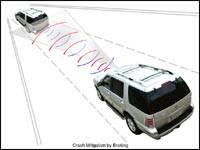
Depending onrelative speed and other factors, every kilometre per hour that a vehicle isslowed before impact reduces the energy of a crash.
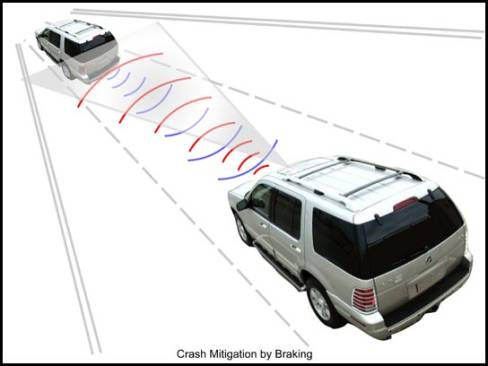
Collisionmitigation applies automatic braking when it determines with certainty that acollision with another vehicle is unavoidable, in both high- and low-speedsituations.
''Importantly,''says Priya Prasad, a Ford technical fellow in safety research and development, ''thefunction assumes the driver has ultimate authority, and it will not interferewith any potential evasive maneuver initiated by the driver.''
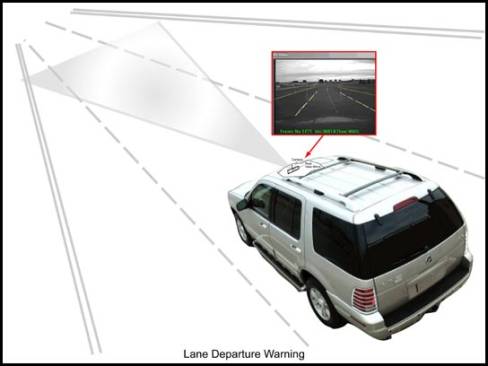
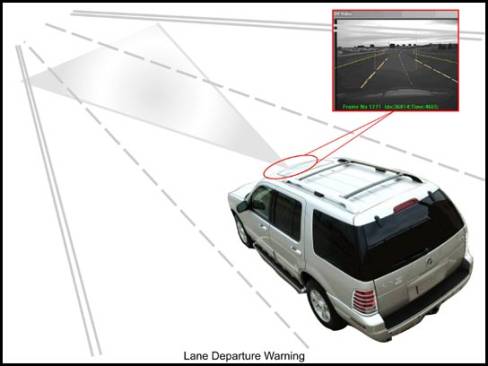
Ford's collision-mitigation'spre-crash sensors consist of a camera and radar to sense vehicles on the roadahead and an electronic control unit, which determines whether a collision isimminent based on the position, speed and direction of other vehicles.
Using estimatesof collision threat and driver intent, the system provides driver warning andenhanced brake control when needed, says Prasad.
Depending onspeed and road factors, the braking can automatically reduce vehicle speed by eightkilometers an hour or more before an impact. The radar and camera systems areunder development so that the system works reliably in heavy rain, fog andother adverse driving conditions.
''Even a few mphreduction at impact can make a difference,'' says Prasad. ''The amount ofenergy at impact is a strong function of speed, so even a slight reduction inspeed offers a significant reduction in force.
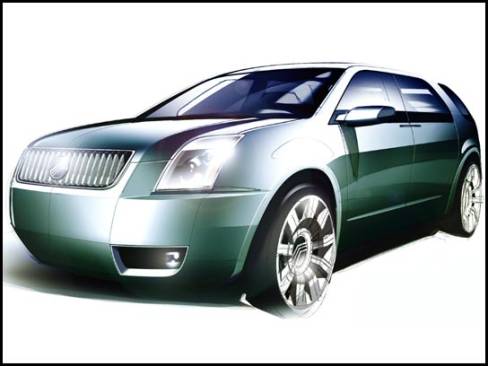
Ford says MetaOne is more than a safety concept alone. Its name is derived from the Greekword ''meta,'' which means to transcend or go beyond. In the case of theMercury Meta One concept, the name connotes the personality of the concept,which transcends the ordinary and the expected in a passenger vehicle.
''Not only doesMeta One foretell the design vision for Mercury's future and suggestpossibilities for future safety innovation,'' says Prasad, ''it also presents aworld-first advanced powertrain plus enhanced electronics and personalizationfeatures.''
More than that,apparently, Meta One ''stretches the distinct sophistication'' of Mercury'sdesign DNA, which for the most part is not available for consideration onCanadian roads these days. Ford of Canada dropped the entire Mercury division afew years back and says it will consider new models on an individual basis,though none of the recent ones have made the cut.
photo:Ford Motor Company
Article Gallery