





“Nowadays, engineers are terribly overspecialized – suspension, brakes, gearbox, aerodynamics, composite materials, drive train, etc. In those days, a single designer could create almost an entire F1 car using just a drawing board. Adrian Newey, current designer at Red Bull is one of them. That’s why he's so successful today; he has the whole picture of the new car in his head. The late Harvey Postlethwaite was like that, as were Mike Gascoyne and Gordon Murray.”
“There’s been a staggering change in the size of the F1 factories. The Tyrrell shop in Ockham was very small. I mean, one guy basically had to breathe out so the other one could breathe in. We did not have a great deal of money, so we had to make things ourselves in house. For example, we didn’t have a seven-post rig. So, we got hydraulic ramps and a consultant did it in house,” Beresford explained.
Here’s another striking example. “My father used to work at McLaren in the early days, when Bruce (McLaren) was around. In 1972, McLaren ran four different race programs – Formula 1, Indy car, Can-Am and Formula 2 – and the team had only four or five designers to create four completely different race cars!”
Formula 1 has indeed changed dramatically over the years.
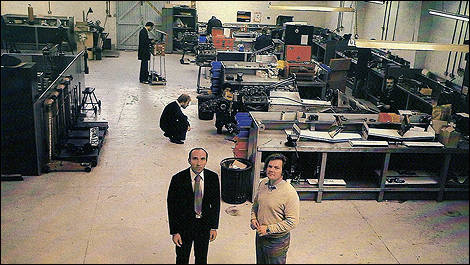 |
| Team Williams's workshops in 1979. (Photo: Archives René Fagnan/Auto123.com) |
“There’s been a staggering change in the size of the F1 factories. The Tyrrell shop in Ockham was very small. I mean, one guy basically had to breathe out so the other one could breathe in. We did not have a great deal of money, so we had to make things ourselves in house. For example, we didn’t have a seven-post rig. So, we got hydraulic ramps and a consultant did it in house,” Beresford explained.
Here’s another striking example. “My father used to work at McLaren in the early days, when Bruce (McLaren) was around. In 1972, McLaren ran four different race programs – Formula 1, Indy car, Can-Am and Formula 2 – and the team had only four or five designers to create four completely different race cars!”
Formula 1 has indeed changed dramatically over the years.
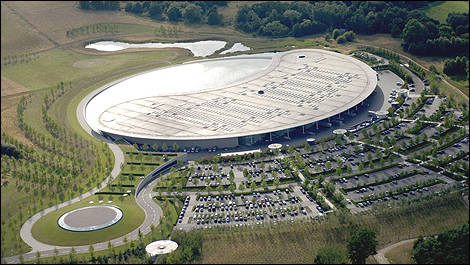 |
| The McLaren Technology Centre in 2010. (Photo: McLaren) |