





We would be surprised if auto companies were surprised by this, but here we are: The opening of the long-awaited Gordie Howe International Bridge has been postponed.
Early this morning, The Windsor-Detroit Bridge Authority (WDBA) announced that a ribbon-cutting ceremony for the bridge scheduled for Friday has been canceled. That follows a joint decision by Canada and the United States to halt the $4.7 billion infrastructure project's launch.
Chuck Andary, interim CEO and chief legal officer for the WDBA, stated that both nations agreed to take “the necessary time to resolve any outstanding issues.”
The announcement marks a whiplash-inducing change of direction for Canadian Prime Minister Mark Carney. Just days earlier, Carney declared the six-lane span would “be open at the end of the week.” By Wednesday, Carney was hedging his bets, telling reporters in Ottawa that “there's no big drama” and that if opening the vital trade link “takes a little longer, it'll take a little longer.”
Despite the political downplaying, the freeze comes as a potential blow to the deeply integrated North American automotive industry. Spanning the Detroit River to connect Windsor and Detroit, the cable-stayed bridge was specifically designed to alleviate crippling gridlock at the aging Ambassador Bridge.
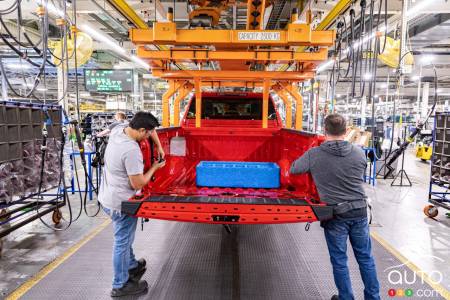
For automakers like Ford, General Motors and Stellantis, the Windsor-Detroit corridor is a critical logistical lifeline. Components routinely cross the border multiple times during assembly, making the automotive supply chain hyper-dependent on “just-in-time” delivery.
The delay means that billions of dollars in daily automotive trade will remain bottlenecked at existing crossings. This continuation of transit friction threatens to escalate shipping costs, trigger manufacturing delays and reduce cross-border efficiency at a time when both Canadian and American auto plants are striving to scale up competitive production.
While workers on both sides of the border have brought the bridge to physical readiness, Andary maintained that a collaborative approach is necessary to safeguard the trade corridor's future. For now, the WDBA has not provided an updated timeline, leaving the auto industry and border communities waiting in limbo.