





Peugeot also stated that they expect fuel-cell cars to be fully mass marketed in about 2015. By then PSA believes the innovative propulsion system should be no more costly to produce than a standard combustion engine, making the purchase of this vehicle a reality for regular consumers and not a financial drain on the automaker. This will be good news for all with an environmentally conscious mindset.
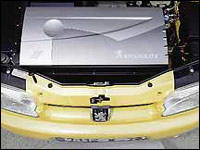 |
| Peugeot is also testing on-board reformation solutions using non-petroleum sources such as biofuel/biogas and also electrolysis, as a source of hydrogen. (Photo: PSA Peugeot Citroën) |
Kudos to Peugeot for their overall strong alternative energy commitment, a company that recognizes that hydrogen as a fuel doesn't necessarily guarantee a greener future unless the fuel is produced from a clean source. They are testing on-board reformation solutions using non-petroleum sources such as biofuel/biogas and also electrolysis, as a source of hydrogen.
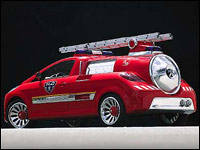 |
| At the moment a fuel cell vehicles costs about 100 times more than a car with a traditional combustion engine, and it will probably be at least 10 years before there is a one to one ratio. (Photo: PSA Peugeot Citroën) |
At present, building a fuel cell vehicle costs about 100 times more than one with a combustion engine, said Robert Peugeot, PSA's head for innovation and quality. Were such prototypes produced for the mass market, there would be economies of scale dramatically reducing cost. But even though, such cars would still cost 10 times that of "normal" cars, he added. "Hopefully the price will be down to a one to one ratio by 2015," Peugeot said.
Peugeot also reiterated that the main technical challenges to overcome before fuel cells become widespread in cars are:
- Making a fuel cell propulsion system last as long as a combustion engine.
- Making it work in cold weather C water produced by fuel cells is liable to freeze. (A critical factor for us Canadians who live in sub/zero temperatures half the year.)
- Fuel cells need cooling, and therefore require large radiators.