





For the time being, research and development work, plus the practical application of selling limited production runs of
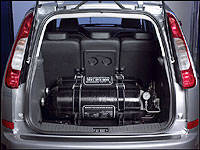 |
| To keep things simple and easy for the consumer, Ford has also improved refueling systems to mimic that of a regular gas pump nozzle. (Photo: Ford Motor Company) |
With regards to Ford's C-Max H2 ICE, large components required for the adaptation to hydrogen, such as the fuel compressor (for storage purposes), have been specially fitted to help maintain a normal exterior appearance and to preserve the type of versatility most of us expect in a vehicle. To keep things simple and easy for the consumer, Ford has also improved refueling systems to mimic that of a regular gas pump nozzle, and three separate hydrogen storage containers which total 31.4 gallons in capacity have been added. This equates to about 5.5 pounds of hydrogen, at 5,076 psi pressure. With a total range of around 125 miles the C-Max H2 ICE is a totally capable daily driver, but it doesn't match the Focus FCV which has a range between
 |
| The major obstacle to the success of hydrogen powered cars like the Focus C-Max H2 ICE is the development of a costly hydrogen infrastructure. (Photo: Ford Motor Company) |
While Ford is doing its part in showing the world it can produce zero-emissions vehicles, governments around the world and fuel supply companies are also anteing up to the table. In Europe, where the Focus C-Max H2 ICE was developed, Germany is a leader among the Economic Union by giving the green light towards the development of a hydrogen infrastructure, without which hydrogen powered FCVs and ICEs will never see any mass acceptance. The development of refueling technologies, construction of refueling sites, manufacture of hydrogen production facilities, as well as the continual research into producing the expensive fuel for much less than is currently possible, are each instrumental hurdles needed to be jumped prior to hydrogen becoming a viable alternative to gasoline or diesel.