





"With two valves per cylinder, only two actuators per cylinder are needed," said Sam Winegarden, GM Powertrain chief engineer of Vortec V8 engine. "The system is intelligently simple and compact."
 |
| GM is bringing its Displacement on Demand system to market later this year, first in its gasoline powered pushrod and overhead cam port-fuel-injected V8 engines, and then after in its midsize six-cylinder engines. (Photo: General Motors) |
Winegarden then added, "By contrast, while Displacement on Demand certainly has merit for overhead cam multi-valve engines, four valves per cylinder require four actuators per cylinder. Additionally, the electro-hydraulic (or other) control network must be packaged within the tight confines of the cylinder head assembly, adding both complexity and cost."
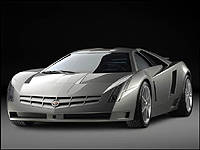 |
| Cadillac's V12 Cien concept car uses GM's eMotion powertrain control system to close the intake and exhaust valves on specific cylinders, effectively turning off half the cylinders, which improves fuel economy by around 8 to 10 percent. (Photo: General Motors) |
With complexity and cost in mind DOD was first shown in Cadillac's V12 Cien concept car, and will be available in the V12 powered Escalade. Basically the system uses GM's eMotion powertrain control system to close the intake and exhaust valves on specific cylinders, effectively turning off half the cylinders, which improves fuel economy by around 8 to 10 percent.
That might sound like little gain for the high level of R & D capital needed to develop the system, but combined with other fuel saving technologies it could go a long way to both reducing the brand's CAFÉ rating and improving green customer relations.